
Updated May 27, 2026 · 10 min read
Tier-1 SEO Scaling: How to Build $10k/Month Affiliate Sites in Competitive Markets
Teams are hitting $10,000/month in Tier-1 affiliate markets using drop domains and monobrand clusters. Here's the exact strategy: domain selection, ranking acceleration, and risk management.

Breaking into Tier-1 markets is one of the toughest challenges in SEO affiliate marketing. The competition is fierce, domains carry established authority, and entry costs run high. Yet it's entirely possible—and profitable—when you apply the right strategy. The real proof comes from teams that have done it: reaching $10,000 monthly revenue and 800 first-time deposits in highly competitive geographies without prior experience in those specific markets.
Success in Tier-1 SEO depends on three factors: strategy, domain selection, and knowing which models rank in saturated search results. Luck plays no role.
Table of Contents
- Why Tier-1 Markets Are Hard
- The Single-Brand Model That Works
- Cluster Strategy for Faster Scaling
- Drop Domains: The Acceleration Lever
- Building Your Drop Domain Pipeline
- Monetization and Risk Management
- FAQ
Why Tier-1 Markets Are Hard
Tier-1 geographies—primarily European countries and Australia—represent some of the highest-value affiliate opportunities. They also represent the steepest climb. When teams first attempt to enter these markets, they quickly discover why.
Established competitors have already built domain authority over years. Their backlink profiles are extensive. Their content footprints span hundreds or thousands of pages. A new player entering the space faces not just content competition but trust competition. Search engines favor domains with history.
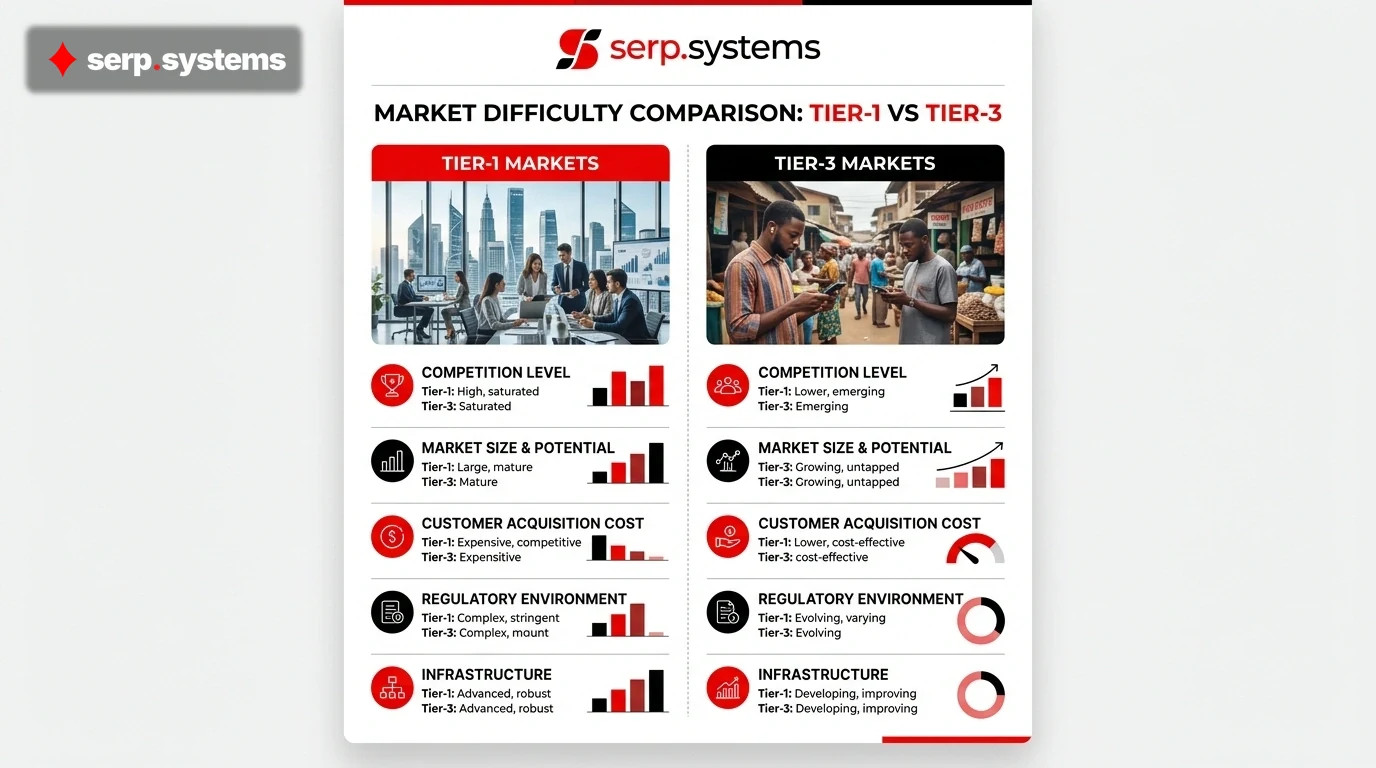
The typical barriers include high content production costs, expensive link acquisition, extended time-to-ranking, and low success rates. When teams launch their first projects without niche experience, they often start in lower-tier geographies where monetization is weak. The revenue doesn't justify the effort. This forces a difficult choice: pivot to Tier-1 or scale in lower-value markets indefinitely.
One team that made the pivot successfully discovered that their initial review-site approach didn't work. Review sites ranked poorly in Tier-1 SERPs where monobrands dominated. They had to rebuild their entire model.
The Single-Brand Model That Works
The breakthrough came when the team shifted from review-aggregator sites to single-brand projects. This was a fundamental repositioning based on SERP analysis.
Monobrands rank better in Tier-1 search results because they match user intent more precisely. Someone searching for a specific branded casino or slot site wants to land on that brand's actual page, not a third-party review. Google's algorithm rewards this match. Review sites still have a place, but they're secondary players in these geographies.
Single-brand sites also allow for faster iteration. Instead of building one massive review site with hundreds of pages, you launch focused, lean projects. Each site targets a specific branded search intent. The content footprint is smaller, the launch is faster, and the monetization path is clearer.
The result was measurable: stable monthly profit around $10,000 with consistent first-time deposits. This wasn't achieved with a single site. It required multiple projects working in concert.
Cluster Strategy for Faster Scaling
Scaling a single profitable site is one thing. Scaling a model is another. The team accelerated their growth by adopting a cluster approach.
Within each cluster, they launched 2 to 6 sites, sometimes up to 10. Each site tested different approaches within the same search intent. One might emphasize bonuses. Another might focus on game selection. A third might highlight user experience. They weren't duplicates—they were variations on a theme.
This approach served multiple purposes. First, it reduced the risk of a single site's failure. If one site underperformed, others in the cluster could still generate revenue. Second, it accelerated ranking velocity. Multiple sites in the same cluster created a network effect, with internal linking and topical clustering helping all sites rank faster.
Third, it provided rapid feedback. Instead of waiting six months to see if one approach worked, the team could test multiple approaches simultaneously and identify winners within weeks.
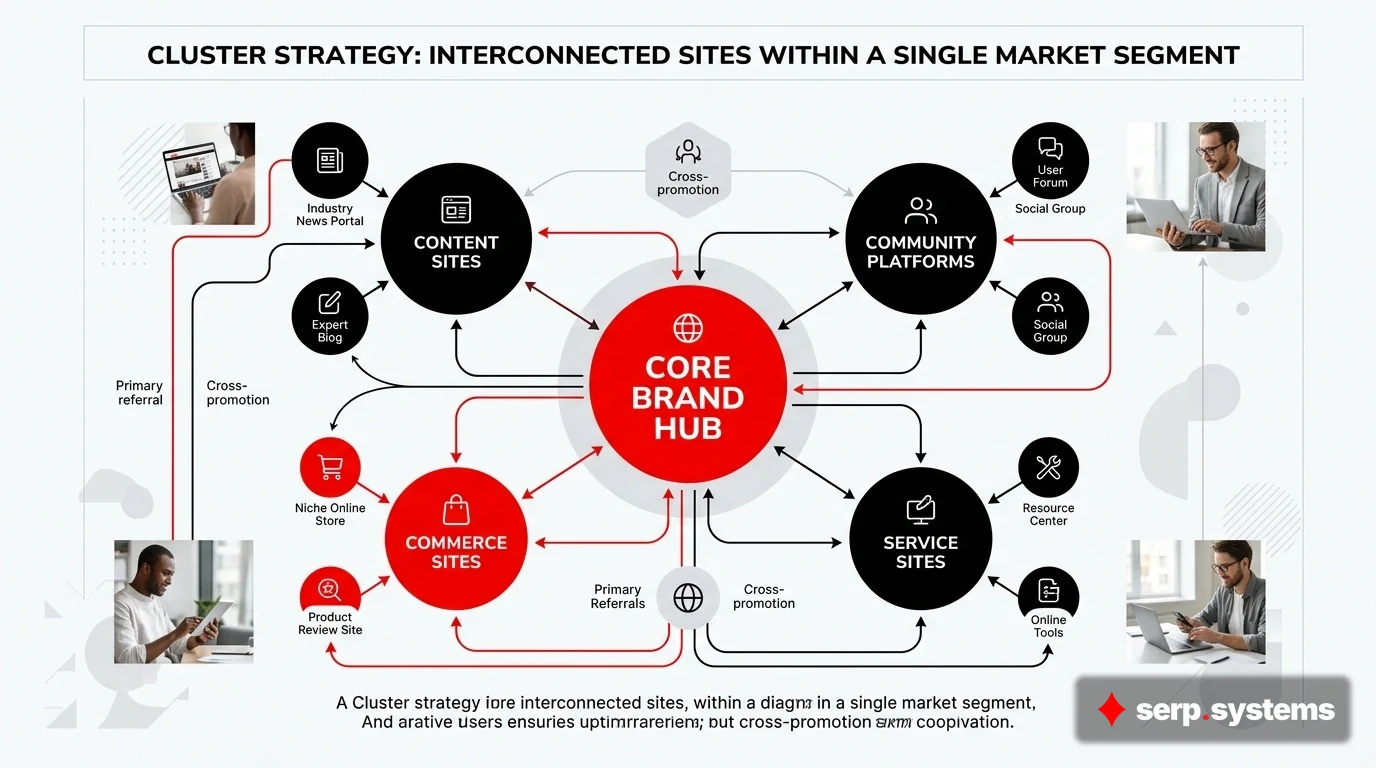
The cluster model also made scaling more efficient. Once a winning formula was identified, it could be replicated across new clusters. The team wasn't starting from scratch each time—they were copying what worked.
Drop Domains: The Acceleration Lever
The single most important lever for Tier-1 scaling was drop domains. Expired domains with existing backlink profiles became the core of the strategy.
Here's why this matters: a fresh domain typically takes 4 to 6 months to show meaningful ranking results. Drop domains—domains with history, established backlinks, and topical authority—delivered results within 1 to 3 months. That's a 50-75% reduction in time-to-revenue.
Fresh domains face indexing delays, trust penalties, and the general friction of being new. Drop domains come pre-loaded with authority signals. They've been indexed before. They have backlinks pointing to them. Search engines recognize them as established properties.
However, not all drop domains are equal. Spam-filled domains with toxic backlink profiles are worthless—or worse, harmful. The filtering process is critical.
The traditional problems with classic branded SEO become manageable with drops. Cluster validation that normally takes 6+ months can happen in 2 to 3 months. The profitability rate improves significantly. Locking in top-3 positions becomes achievable rather than theoretical.
Building Your Drop Domain Pipeline
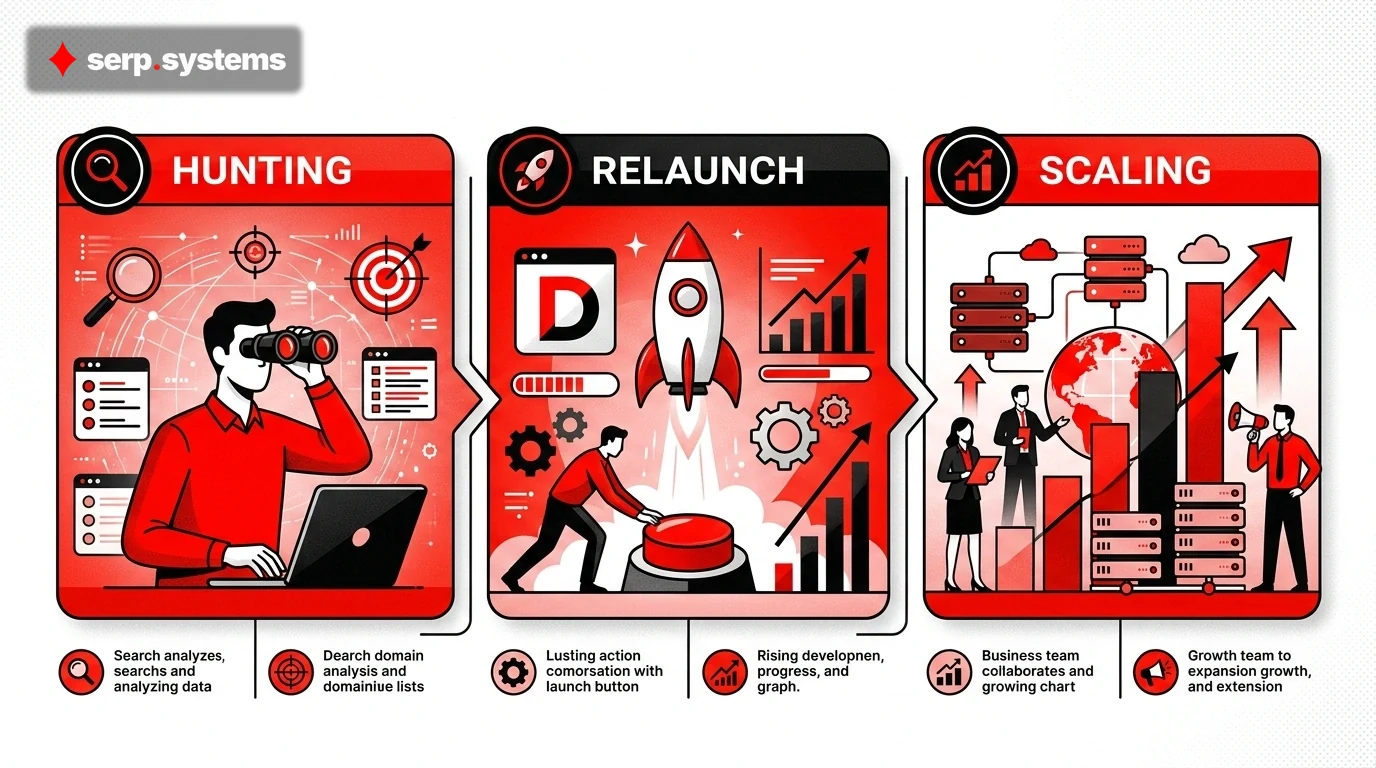
A proper drop domain strategy has three distinct phases. Each phase requires different tools, expertise, and attention to detail.
Phase 1: Drop Hunting and Filtering
The goal is to identify domains with legitimate backlink authority and relevant history. You need surgical selection based on specific criteria.
Start by collecting domains from high-authority sources: .gov sites, .edu institutions, news publications, and traffic-driven resources. These domains have inherent trust. A backlink from a .gov or .edu domain carries more weight than one from a random blog.
Next, analyze the domains. Check domain rating (DR), count dofollow backlinks, and assess the quality of the linking domains. A domain with 50 high-quality backlinks is worth more than one with 500 low-quality ones.
Clean up spam and toxic links. Some expired domains were used for spam before expiration. Their backlink profiles are polluted. You need to identify and avoid these. Check the domain's history via the Web Archive to see what it was used for previously.
The numbers are striking: out of approximately 25,000 domains analyzed, only about 50 emerge as high-quality assets. That's a 0.2% yield. It's a narrow funnel, but the survivors are genuinely valuable.
Phase 2: Relaunch and Testing
Once you've identified a quality drop domain, the relaunch phase begins. Each drop becomes a standalone site with unique design and content.
Don't recycle old content from the domain's previous iteration. That content might be outdated, irrelevant, or algorithmically flagged. Build fresh. The drop domain's value comes from its backlink profile and authority history, not its old pages.
Test multiple SEO approaches on different drops. One site might emphasize on-page optimization. Another might focus on internal linking architecture. A third might prioritize content depth. The cluster approach allows rapid hypothesis testing.
Phase 3: Scaling and Optimization
Once a drop performs well, the model can be scaled. Identify similar domains with comparable authority profiles. Relaunch them using the proven formula. The playbook becomes repeatable.
Tools like those available through serp.systems can help identify drop domains, analyze their backlink profiles, and track their performance over time. Proper analysis ensures you're not wasting resources on domains that won't deliver results.
Monetization and Risk Management
Scaling to $10,000 monthly revenue requires more than just rankings. Monetization strategy and risk distribution matter equally.
The team worked with multiple brands across different niches: Slot Mafia, Slot Lounge, RollXO, and HollyWin. Diversification across brands reduced dependency on any single partnership. If one brand's CPA (cost per action) rates dropped, others could compensate.
Geo diversification also mattered. Operating across European countries and Australia spread risk across different regulatory environments and market conditions. A change in one country's gambling regulations wouldn't tank the entire operation.
The cluster model provided another layer of protection. If one site in a cluster underperformed, the others continued generating revenue. The portfolio approach made the business more resilient.
However, Tier-1 markets come with regulatory scrutiny. Compliance becomes critical. What works in Tier-3 geographies might violate local laws in Europe or Australia. The team had to build compliance into their operations from the start, not as an afterthought.
Content quality also became a risk factor. Low-quality content might rank initially on a drop domain, but Google's helpful content updates could penalize it later. The team had to maintain content standards even as they scaled.
FAQ
How long does it take to see results with drop domains?
Drop domains typically show results within 1 to 3 months, compared to 4 to 6 months for fresh domains. The existing backlink profile and domain history accelerate indexing and ranking. However, this assumes proper domain selection and quality content. A spam-filled drop domain won't perform better than a fresh one.
What's the difference between a monobrand site and a review site?
Monobrand sites focus on a single product or brand, matching direct branded search intent. Review sites aggregate multiple options, matching comparison intent. In Tier-1 markets, monobrands rank better because they match what users are actually searching for. Review sites still work but rank lower and generate less revenue per click.
Can you really filter 25,000 domains down to 50 quality assets?
Yes, but it requires systematic analysis. Most expired domains have toxic backlinks, outdated content, or irrelevant history. By checking domain rating, backlink quality, and historical context, you can identify the genuinely valuable ones. The 0.2% yield is typical for rigorous filtering. Relaxing your standards gets you more domains but with lower quality.
How many sites should be in a cluster?
The team tested clusters with 2 to 10 sites. The optimal range appears to be 2 to 6 sites per cluster. This provides enough variation to test different approaches while keeping management overhead reasonable. Too many sites in one cluster can create internal competition for the same keywords.
What happens if Google penalizes a drop domain for its previous use?
This is a real risk. Some drop domains were used for spam before expiration. Google might still associate them with that spam history. That's why checking the Web Archive and analyzing backlink quality is essential. If a domain has a history of spam, avoid it. The filtering process exists to catch these cases.
Is drop domain scaling sustainable long-term?
Yes, but with caveats. The supply of high-quality drop domains is limited. As more teams adopt this strategy, finding quality domains becomes harder. The team that moves early and builds efficient filtering systems has an advantage. Additionally, Google might eventually crack down on drop domain usage if it becomes too widespread. Diversifying your strategy—mixing drops with fresh domains and other tactics—provides insurance against this risk.