Updated May 10, 2026 · 10 min read
What Is the Difference Between On-Page and Off-Page SEO?
On-page and off-page SEO are two distinct but equally critical ranking strategies. On-page covers title tags, content, and technical optimization; off-page focuses on backlinks and brand authority. Here's how they work together to drive rankings.

Search engine optimization splits into two fundamental approaches: on-page and off-page SEO. Understanding how they differ and work together is critical for anyone building organic visibility. On-page SEO focuses on elements you control directly on your website, while off-page SEO involves actions taken outside your site to build authority and trust. Both matter equally for ranking success.
Table of Contents
- What On-Page SEO Covers
- What Off-Page SEO Covers
- How They Work Together
- Key Metrics and Measurement
- Common Mistakes in Both Approaches
- Frequently Asked Questions
- Final Take
What On-Page SEO Covers
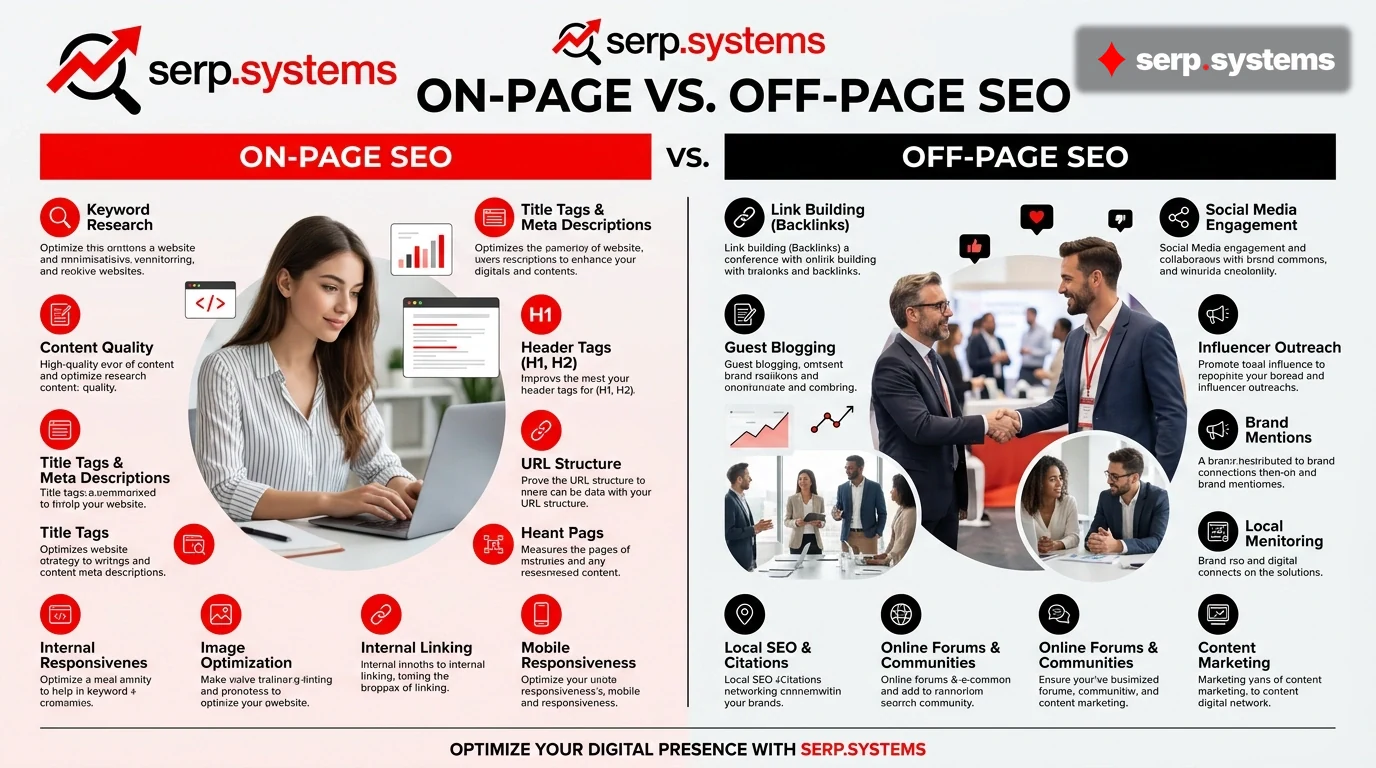
On-page SEO includes everything you optimize within your website's code and content. This covers title tags, meta descriptions, header tags, keyword placement, internal linking, image optimization, and page speed. You have complete control over these elements, making on-page SEO the foundation of any optimization strategy.
Title tags appear in browser tabs and search results. They should include your target keyword near the beginning and stay between 50-60 characters. A strong title like "Best SEO Tools for Small Businesses in 2026" performs better than vague titles. Meta descriptions follow below the title in search results and influence click-through rates, though they don't directly impact rankings.
Header tags (H1, H2, H3) organize content and signal importance to search engines. Your main heading should contain your primary keyword, while subheadings can target related terms. This structure helps both readers and algorithms understand your content's hierarchy. Internal links connect related pages on your site, spreading authority and helping users navigate your content.
Keyword placement throughout your content matters, but natural integration beats forced repetition. Search engines expect keywords to appear in your opening paragraph, headings, and naturally throughout the text. Aim for 1-3% keyword density—roughly one mention per 300 words. Stuffing keywords damages readability and can trigger spam filters.
Page speed directly affects rankings and user experience. Faster pages rank higher and keep visitors engaged longer. Compress images, enable caching, and minimize code to improve load times. Mobile responsiveness is non-negotiable; most searches now happen on phones, and Google prioritizes mobile-friendly sites.
Content quality separates successful pages from the rest. Comprehensive, original content that answers user questions ranks better than thin or duplicate material. Aim for depth and specificity. Cover your topic thoroughly with examples, data, and clear explanations. Search engines reward pages that satisfy search intent better than competitors.
What Off-Page SEO Covers
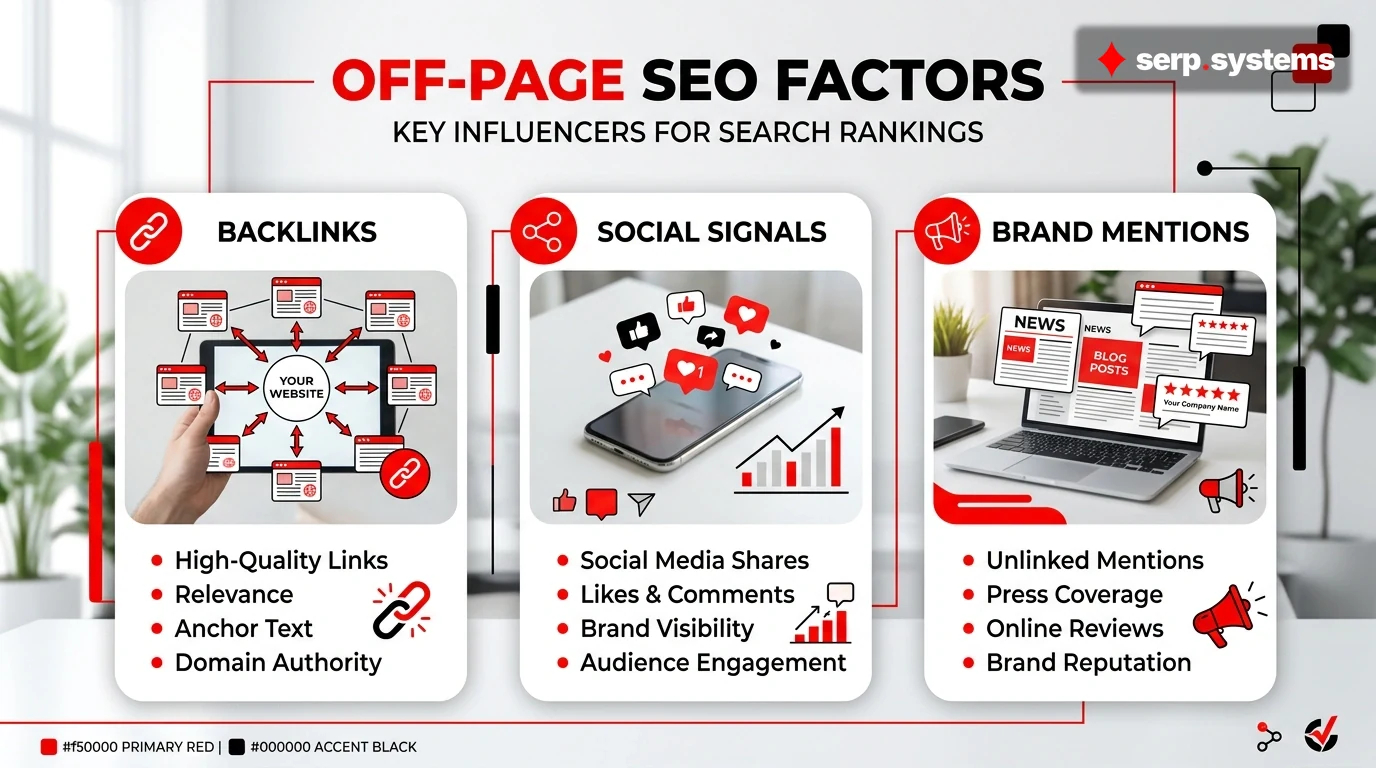
Off-page SEO happens outside your website and centers on building authority, trust, and relevance through external signals. Backlinks remain the primary off-page ranking factor. When other sites link to your content, search engines interpret this as a vote of confidence. However, not all links carry equal weight—links from authoritative, relevant sites matter far more than random links.
Backlink quality trumps quantity. A single link from a trusted industry publication outweighs dozens of links from low-authority sites. Search engines evaluate the linking domain's authority, relevance to your topic, and the anchor text used. Natural links earned through quality content perform better than links you actively solicit or purchase.
Social signals influence off-page SEO indirectly. While social media shares don't directly rank your pages, they increase visibility and drive traffic. Shared content gets more eyes, creating more opportunities for natural backlinks. Active social presence builds brand authority and audience trust.
Brand mentions matter even without links. When people mention your business online—in articles, forums, or reviews—it signals relevance and trustworthiness. Search engines track branded searches and mentions as trust indicators. Building a strong brand presence amplifies your off-page authority.
Local SEO is an off-page consideration for businesses serving specific areas. Google My Business listings, local citations, and location-based reviews impact local search rankings. Consistent business information across directories (name, address, phone) helps search engines verify legitimacy.
Referral traffic from other websites indicates content value. When users click through from external sites to yours, it shows your content resonates with audiences beyond your own channels. This traffic pattern influences how search engines perceive your site's importance.
How They Work Together
On-page and off-page SEO aren't separate strategies—they're interconnected parts of a complete optimization plan. Strong on-page SEO makes your content more shareable and link-worthy. If your pages are poorly optimized, even excellent off-page efforts yield limited results.
Conversely, off-page authority helps on-page content rank better. A page with great on-page optimization but no backlinks struggles to rank competitively. A page with solid backlinks but weak on-page optimization underperforms because search engines can't fully understand its relevance.
The most effective strategy combines both. Create high-quality, well-optimized content (on-page), then build authority through backlinks and mentions (off-page). This combination sends strong signals that your content deserves top rankings.
Consider a typical ranking scenario. A competitor publishes an article on your target keyword with mediocre on-page optimization but 50 high-quality backlinks. Your article has perfect on-page optimization but no backlinks. The competitor likely ranks higher because off-page authority outweighs on-page perfection in competitive spaces. However, improve your backlink profile, and your superior on-page work gives you an edge.
Search engines use both signals to understand what content best serves users. On-page elements tell algorithms what your page is about and how well it addresses specific queries. Off-page signals confirm that other authoritative sources vouch for your content's quality.
Key Metrics and Measurement
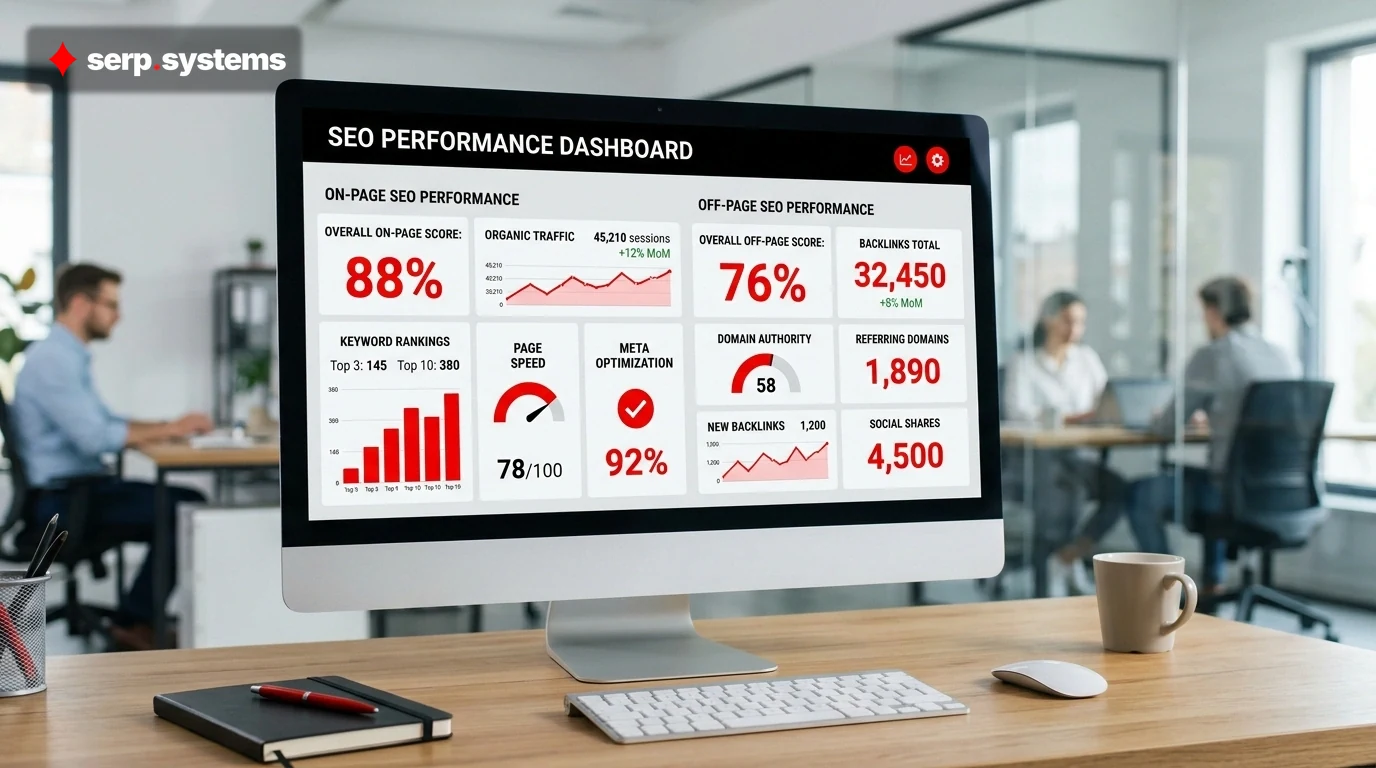
Tracking performance requires monitoring both on-page and off-page metrics. On-page metrics include keyword rankings, click-through rates from search results, bounce rate, time on page, and conversion rates. Tools help measure how well your on-page optimization drives actual results.
Off-page metrics focus on backlink quantity and quality, referring domain authority, brand mentions, and social engagement. The number of backlinks matters less than their quality and relevance. A few links from high-authority sites outperform many links from weak domains.
Domain authority and page authority are composite scores that reflect overall link profile strength. These metrics help you understand your competitive position and identify improvement opportunities. However, they're estimates—actual ranking factors are more complex.
Keyword rankings track your visibility for target terms. Monitor rankings across search engines and devices to understand your progress. Improving rankings indicates your optimization efforts work, while stagnation suggests strategy adjustments are needed.
Traffic patterns reveal whether your optimization translates to real results. Increased organic traffic means your rankings drive actual visitors. Conversely, high rankings with low traffic suggest your content doesn't match search intent or your title and description need improvement.
Common Mistakes in Both Approaches
Many sites stumble by neglecting one approach entirely. Some focus exclusively on on-page optimization while ignoring backlinks. Others chase backlinks without ensuring their on-page fundamentals are solid. Success requires attention to both.
On-page mistakes include keyword stuffing, which damages readability and triggers spam filters. Thin content that barely addresses the topic fails to satisfy search intent. Ignoring mobile optimization costs rankings since most searches happen on phones. Slow page speeds frustrate users and hurt rankings.
Poor internal linking structures waste opportunities to distribute authority and help users navigate. Missing or vague meta descriptions reduce click-through rates. Duplicate content confuses search engines about which version to rank. These mistakes are easily correctable once identified.
Off-page mistakes often involve pursuing low-quality backlinks. Buying links, participating in link schemes, or building thousands of links from irrelevant sites triggers penalties. Search engines penalize unnatural link patterns harshly. Focus on earning links from relevant, authoritative sources through quality content.
Neglecting brand building limits your off-page potential. If nobody knows about your business or content, earning mentions and backlinks becomes harder. Building audience trust and visibility takes time but compounds over years.
Ignoring local SEO hurts businesses serving specific areas. Incomplete or inconsistent business information across directories damages local rankings. Reviews and local citations matter more than many realize for local search visibility.
Frequently Asked Questions
Can you rank without off-page SEO?
Ranking without backlinks is possible for low-competition keywords with minimal search volume. However, competitive keywords almost always require off-page authority. Strong on-page optimization alone rarely achieves top rankings in competitive spaces. Most successful sites combine solid on-page work with strategic backlink building.
How long does off-page SEO take to show results?
Off-page SEO typically takes 3-6 months to show measurable ranking improvements. Building authority through backlinks is gradual. Quality links earned from relevant sites compound over time. Patience is essential—quick results often indicate low-quality tactics that risk penalties.
Is on-page SEO still important in 2026?
Absolutely. On-page SEO remains foundational despite algorithm changes. Search engines still rely on title tags, headers, keyword relevance, and content quality to understand pages. Skipping on-page optimization guarantees underperformance regardless of off-page efforts. It's the baseline for any ranking strategy.
How many backlinks do you need to rank?
There's no magic number. Quality matters far more than quantity. A single link from a highly authoritative site can outweigh dozens of mediocre links. Competitive keywords typically require 10-50+ quality backlinks, but some rank with fewer if those links are exceptionally strong. Focus on earning links from relevant, trusted sources.
What's the fastest way to improve rankings?
Fixing on-page issues yields quicker results than building backlinks. Optimizing title tags, improving content quality, and fixing technical issues can improve rankings in weeks. Off-page improvements take longer but provide sustained, competitive advantages. Combine quick on-page wins with long-term off-page authority building.
Should small businesses focus on on-page or off-page SEO?
Small businesses should prioritize on-page SEO first since it's controllable and cost-effective. Build a solid foundation with optimized content and technical health. Then pursue off-page opportunities through content marketing, local SEO, and relationship building. Both matter, but starting with on-page fundamentals makes sense for limited budgets.
Final Take
Understanding the distinction between on-page and off-page SEO clarifies how search engines evaluate and rank content. On-page elements let you control how search engines understand your pages, while off-page signals build the authority needed to compete. Neither works in isolation—they're complementary strategies that together create a powerful ranking foundation.
The most successful sites treat both with equal importance. They publish optimized, high-quality content while simultaneously building authority through backlinks and brand presence. This two-pronged approach delivers sustainable, competitive rankings across challenging keywords.
If you're ready to implement both strategies systematically, serp.systems provides tools to analyze on-page optimization gaps and track your backlink profile growth. Start by auditing your current on-page performance, then develop a backlink strategy targeting relevant, authoritative sites in your industry.