Updated April 27, 2026 · 10 min read
How Long Does SEO Take to Show Results in 2026?
Most websites see SEO results in three to six months, but domain age, backlinks, and competition shift the timeline significantly. Here's what to expect month-by-month and how to measure progress before rankings improve.

Most websites see results from their SEO strategy in three to six months, but domain age, backlink profile, and competition shift this timeline. The honest answer depends on what "results" mean to your business—and how you're measuring them.
Table of Contents
- What Counts as SEO Results?
- The 3-6 Month Benchmark
- Why SEO Takes Time
- Month-by-Month Timeline
- Factors That Speed Up or Slow Down Results
- How to Measure Progress Before Rankings Improve
- Competitive Markets Take Longer
- What About AI Overviews and Zero-Click Searches?
- Frequently Asked Questions
What Counts as SEO Results?
Before diving into timelines, define what you're measuring. SEO success isn't just about ranking blue links on traditional search engine results pages anymore. Results now appear as brand citations in AI answers, attribution in summarized responses, stronger local prominence in map-based results, and mentions in voice search responses where your brand gets spoken instead of visited.
This shift matters because you might be winning visibility without seeing a traffic bump in your analytics. Tools like serp.systems help you track visibility signals beyond just clicks—impressions, rankings, and citations all tell the story.
The 3-6 Month Benchmark
SEO typically produces measurable results in three to six months, though competitive industries often need six to 12 months for significant ranking and revenue impact. This timeframe appears consistently across research and real-world campaigns. It's a starting point, not a guarantee.
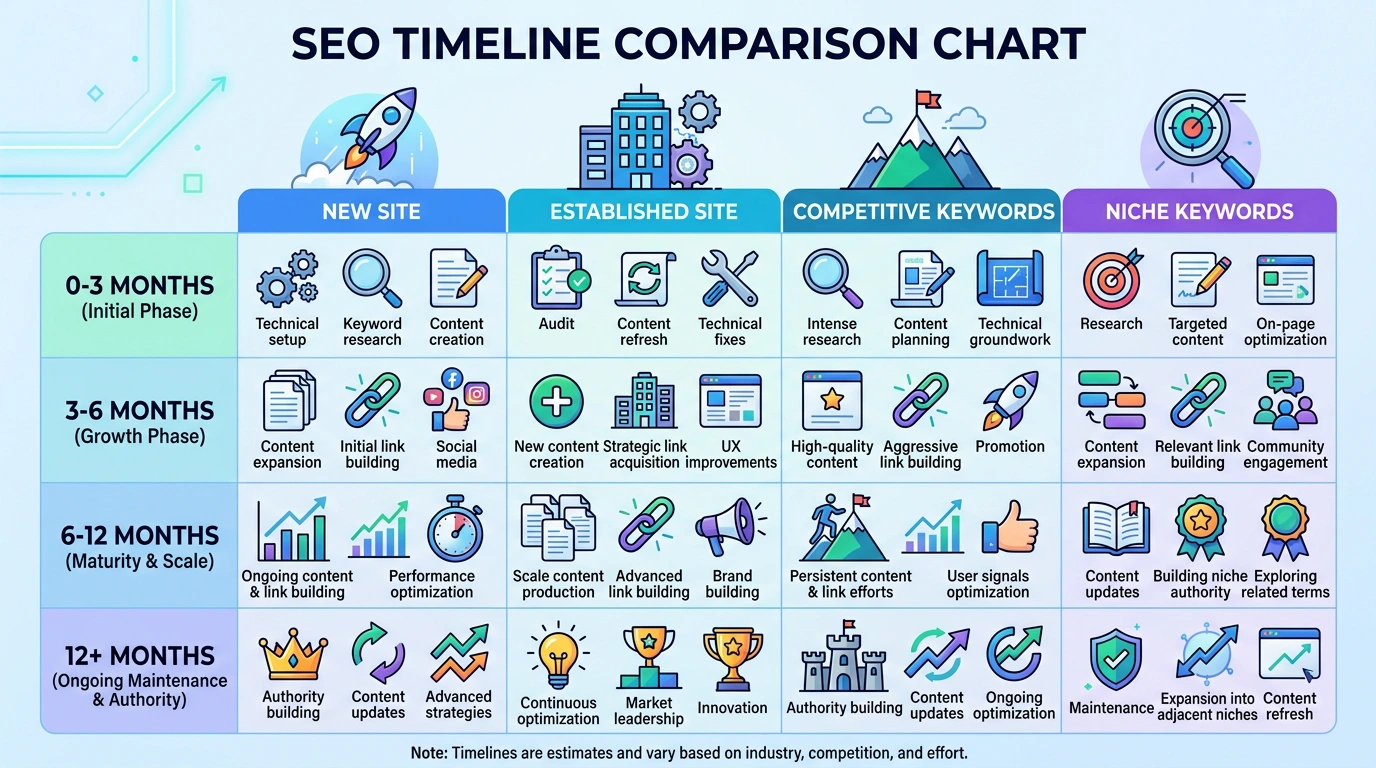
New sites usually need 4–6 months before consistent SEO results appear, as search engines establish trust and authority. Established websites often move faster because they already carry domain credibility. A brand-new site in a low-competition niche might rank within weeks for long-tail keywords. A new site targeting "hotels" or "insurance" could take a year or more.
Why SEO Takes Time
Google's crawlers need to find your new content, index it, and test how users interact with it. But the bigger reason is trust. Google wants to ensure that when a user asks a question, the answer is accurate, authoritative, and safe. If any website could rank overnight, search results would flood with spam and low-quality information.
The average top-10 ranking page is over 2 years old. Only 5.7% of newly published pages reach the top 10 within a year of publication. Ranking pages accumulate backlinks, behavioral signals, and demonstrated consistency over time.
Month-by-Month Timeline
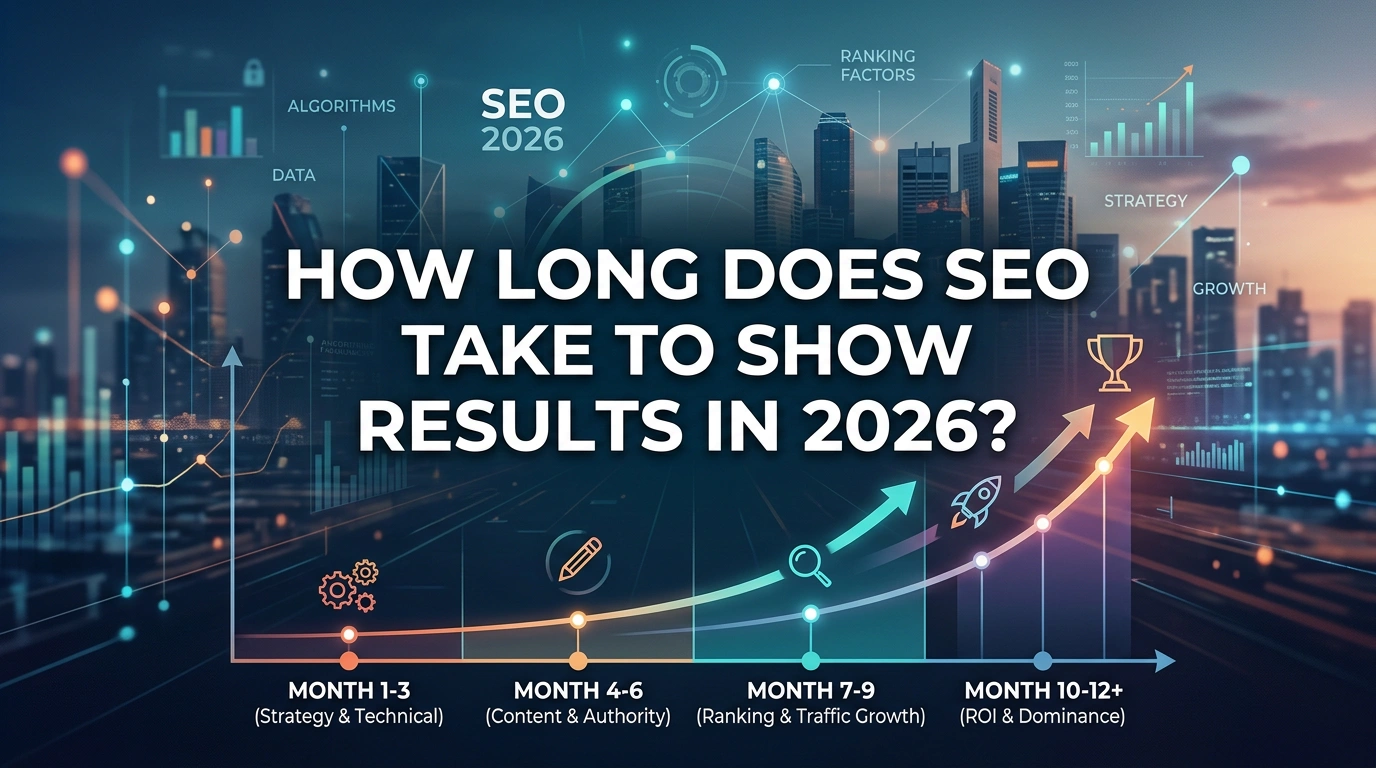
Months 1-2: Foundation Work
Your first month focuses on preparing your site for growth. Before climbing the rankings, you need a clean, healthy foundation that search engines can easily crawl and understand. This phase includes technical audits, keyword research, and initial content optimization.
You won't see ranking changes yet. Google Search Console should show improved crawling and indexing activity. Expect no traffic bump at this stage.
Months 3-4: Early Signals Emerge
By month four, rankings start moving—but don't expect stability yet. Google often deliberately shifts pages up and down after big changes to test performance. This "trial period" can last 60 to 90 days, and rankings might dip before they improve.
Months 3-4 produce early signals: long-tail keyword movement, impressions climbing in Google Search Console, and first leads from organic search. This is often your first moment where the strategy feels real.
Months 5-6: Visible Results
Your earlier groundwork delivers its first real returns. Organic search traffic starts climbing, and you might see your first SEO-driven sales. By month six, you should have clearer patterns: multiple pages ranking for related keywords, consistent organic traffic, and potentially qualified leads from search.
You should see stable patterns of non-brand clicks, multiple pages ranking for clusters of terms, and a clearer link between organic sessions and inquiries—if the strategy and implementation have been consistent.
Months 6-12: Compounding Growth
Months 4-6 represent the traction phase: mid-funnel keywords begin ranking, monthly lead volume from organic becomes measurable and consistent. Months 6-9 show significant progress: primary service keywords enter the top 10, organic traffic becomes a meaningful channel, and cost per lead drops sharply. Months 9-12 enter compounding growth: authority accumulated from early work accelerates new content rankings, and organic search may become your top traffic source.
Early content helps newer content rank faster. Internal linking distributes authority more efficiently. The site becomes more complete in Google's view.
Factors That Speed Up or Slow Down Results
Not all SEO timelines are equal. Several factors shift your expected 3-6 month window significantly.
Domain Age and Authority
Your domain's history influences how long SEO takes to work. Older domains typically perform better than younger ones because they carry more established history with search engines and more extensive backlink profiles.
An established site launching new content can see results in weeks. A brand-new domain targeting the same keywords might wait months.
Keyword Competition
Shorter keywords (one to two words) with higher search volumes are typically more competitive than longer keywords (three to four words or more). Competing for "hotels" means battling big-name sites. If your website lacks the backlink profile and other ranking factors to compete, you'll see little traction.
Local and niche keywords move faster. Local SEO and Google Business Profile optimization often show results within weeks, especially in less competitive markets.
Technical SEO Health
Site speed, mobile-friendliness, and crawlability are foundational areas that affect your timeline. Addressing technical issues creates quick wins and prevents mid- and long-term performance pitfalls.
If your site is slow, broken, or hard to crawl, you'll spend months fixing the engine before seeing ranking movement. A clean site from day one builds momentum faster.
Content Quality and Consistency
Content drives your organic performance. Your SEO timeline depends on having valuable, relevant, and engaging content on your site.
One exceptional blog post per month beats four mediocre ones. Consistent publishing builds topical authority faster than sporadic efforts.
Backlink Profile
Backlink profile is one of the biggest ranking factors because it signals reputation. Websites with stronger backlink profiles see SEO results faster. Search engines know these sites are trusted, making them more reputable information sources.
Building backlinks takes time, but starting with quality links from day one accelerates your timeline compared to sites starting from zero authority.
How to Measure Progress Before Rankings Improve
If you're waiting three to six months for traffic, how do you know if your strategy is working? Don't wait for rankings to validate your efforts. Track these leading indicators instead.
Early Wins to Watch
You may see early signs in a few weeks: pages being indexed, impressions rising, or long-tail keywords appearing in Search Console. These are early signals, not full SEO results.
Check Google Search Console regularly. Watch for:
- Growing impressions (even if clicks haven't moved)
- New pages being indexed
- Long-tail keywords appearing for the first time
- Crawl efficiency improving
These signals mean your foundation is working. They don't guarantee rankings yet, but they show momentum.
Impressions Before Clicks
Impressions often rise first. Clicks may follow. More pages begin showing up for more searches. Impression growth is your first real signal. A page showing up 100 times per month (even in position 10) is progress. Clicks will follow as you improve content and rankings.
Content Indexing and Coverage
Make sure Google is actually crawling your new pages. Use Google Search Console to verify pages are indexed, not just discovered. The gap between "discovered" and "indexed" wastes time. Fix crawl issues immediately.
Tools like serp.systems help you track which pages are indexed and which are getting impressions, giving you a clearer picture of progress before rankings shift.
Competitive Markets Take Longer
In competitive spaces, timelines extend significantly. If you're in e-commerce or targeting broad category keywords, significant movement can take 12 months or longer. Older, established pages tend to dominate these spaces. Newer or recently improved pages need time to acquire trust signals, engagement data, and topical coverage to compete.
If you're competing against established players, plan for 9-12 months. If you're targeting niche or local keywords, 3-6 months is realistic.
What About AI Overviews and Zero-Click Searches?
Up to 55% of Google searches now display an AI overview. Additionally, up to 58% of Google searches result in zero clicks. You may be influencing buying decisions without ever seeing the click in your analytics.
This changes how you measure SEO success. You might rank position three for a keyword but get fewer clicks because Google's AI Overview answers the question directly. Yet your brand gets mentioned in that overview, which wins awareness and authority.
Google's AI Overviews now summarize answers at the very top of the page. This changed the SEO results timeline because you need to optimize for "citation" within those AI summaries. To do this, your content needs to be extremely clear and data-backed.
Frequently Asked Questions
Can I see SEO results in less than 3 months?
Yes, but it depends. Sometimes you see small signs in one month, like indexing, impressions, or minor movement on low-competition terms. Meaningful business results in one month aren't typical, especially for law firms and competitive service markets. Strong SEO usually needs more time. Technical fixes and local SEO can show faster wins, but organic traffic growth typically takes longer.
What if I'm not seeing results after 6 months?
SEO fails predictably. Usually, it's not because Google "changed the rules," but because the strategy had foundational problems long before rankings had a chance. When SEO takes longer than expected, it's almost always because one or more foundational pieces are missing. Audit your technical SEO, content quality, and backlink strategy. Inconsistency or implementation delays often explain slow progress.
How does local SEO timing differ?
Local SEO is usually much faster. You're only competing with businesses in your specific city rather than the entire country, so you can often see significant map-pack results within 3 to 4 months. Local SEO wins come faster because competition is lower and intent is clearer.
Is SEO worth the wait?
Paid ads stop the moment you stop paying. SEO campaigns build equity that carries you for far longer. Once you rank, you keep getting traffic without paying per click. The long timeline is the trade-off for sustainable, compounding returns.
Should I use PPC while waiting for SEO results?
Yes. SEO is a slow-build strategy requiring patience for long-term results, while PPC delivers near-instant traffic. Using both strategies together provides short-term results from PPC while building sustainable organic traffic through SEO. PPC keeps revenue flowing while SEO builds. PPC data also reveals which keywords convert, guiding your long-term SEO strategy.
How do I know if my SEO agency is doing good work?
Track leading indicators. Are impressions rising? Are new pages being indexed? Are you seeing movement on long-tail keywords? If none of these are happening after three months, something's wrong. Good SEO shows measurable progress even before rankings shift.