Updated May 09, 2026 · 10 min read
How Often Does Google Update Its SEO Guidelines in 2026?
Google releases algorithm updates continuously throughout 2026 — not on a fixed schedule. Core updates happen several times yearly, while thousands of smaller changes occur constantly. Here's how to track them and adapt.

Google updates its SEO guidelines more frequently than most people realize. The company doesn't follow a fixed schedule — instead, it rolls out changes continuously throughout the year, sometimes with major algorithm updates that shake the entire search landscape, and other times with smaller refinements that go largely unnoticed. Understanding the rhythm of these updates is critical for anyone managing a website or relying on organic search traffic.
Table of Contents
- Google's Update Frequency and Patterns
- Major Algorithm Updates vs. Minor Refinements
- How to Track Google's SEO Guideline Changes
- Core Web Vitals and Ongoing Ranking Factors
- What Changed in 2024-2026
- Preparing Your Site for Future Updates
- Preparing for What's Next
- Frequently Asked Questions
Google's Update Frequency and Patterns
Google doesn't release SEO guideline updates on a predictable monthly or quarterly basis. Instead, the company operates a continuous deployment model where changes happen throughout the year. Some updates arrive with advance notice and detailed documentation, while others roll out silently and only become apparent when rankings shift unexpectedly.
Historically, Google has confirmed that it makes thousands of changes to its search algorithm every year. In fact, the company tests new features and ranking factors constantly in the background before wider rollout. This means the SEO landscape is perpetually in flux, and what worked perfectly six months ago may need adjustment today.
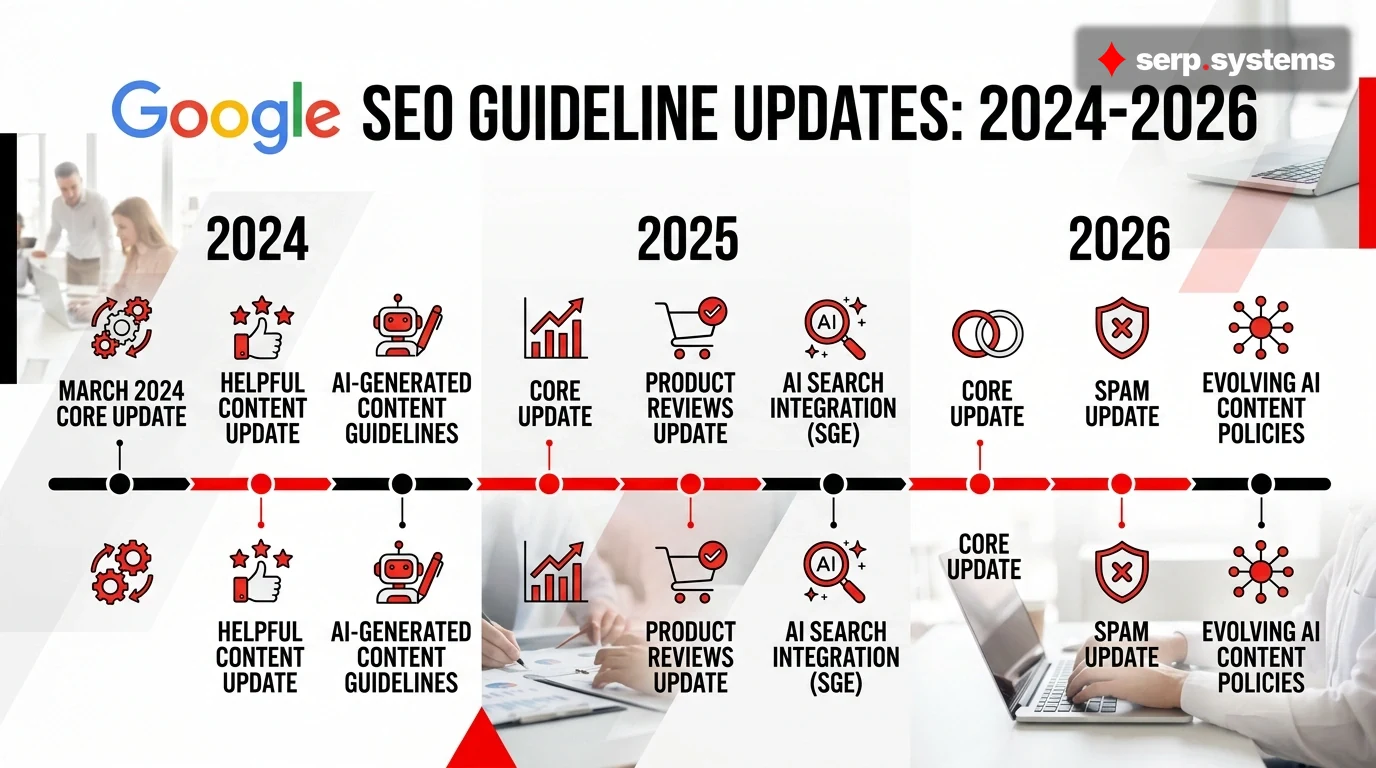
The most visible updates come in the form of core algorithm updates, which Google announces publicly. These typically happen several times per year and can have significant impacts on search rankings across industries. Between core updates, Google also releases product updates that introduce new search features, refine existing ones, or adjust how certain content types are ranked.
Major Algorithm Updates vs. Minor Refinements
Not all updates are created equal. Google distinguishes between different categories of changes, and understanding this hierarchy helps you prioritize your SEO efforts.
Core Algorithm Updates
Core updates are the heavyweight changes that get official announcements from Google. These updates can affect how the search engine evaluates content quality, relevance, and authority. A core update might shift rankings across millions of pages, and recovery can take weeks or months depending on the nature of your content and site structure.
Google typically releases core updates every few months, though the exact timing varies. In 2024 and 2025, the company maintained a somewhat unpredictable schedule, sometimes spacing updates four to six months apart, other times releasing them closer together. These major updates receive detailed documentation from Google's Search team, including guidance on what changed and how to adapt your strategy.
Spam and Security Updates
Beyond core algorithms, Google regularly rolls out updates specifically targeting spam, malicious content, and policy violations. These updates focus on removing low-quality or deceptive content from search results. They're less about changing ranking criteria and more about enforcing Google's webmaster guidelines.
Helpful Content Updates
Starting in 2023, Google introduced Helpful Content Updates as a distinct category. These focus specifically on rewarding content that genuinely helps users and demoting content created primarily for search engine optimization rather than user value. This represents a philosophical shift in how Google evaluates pages, and it continues to evolve through 2026.
Product and Feature Updates
Between major algorithm changes, Google constantly refines its search results page. New features like AI-powered summaries, expanded knowledge panels, or updated rich snippet displays can shift how traffic flows. A feature update might not change ranking criteria directly, but it can dramatically alter click-through rates and visibility for specific queries.
How to Track Google's SEO Guideline Changes
Staying informed about updates requires active monitoring. Google doesn't always announce changes in advance, so you need reliable sources to stay current.
Google's Official Channels remain the most authoritative source. The Google Search Central Blog publishes official announcements about major updates, new guidelines, and feature releases. Subscribing to this blog ensures you catch important news directly from the source.
The Google Search Central documentation provides comprehensive guidance on SEO best practices. Google updates this resource frequently to reflect current algorithm behavior and policy changes. When Google makes a significant shift in how it ranks content, the documentation usually gets updated to reflect the new guidance.
Search Console messages can alert you to issues affecting your site specifically. Google sometimes sends notifications through Search Console when it detects problems or when new guidelines might apply to your content. Checking your Search Console account regularly helps you catch these alerts before they impact your rankings.
Monitoring tools and industry publications also track algorithm updates by analyzing ranking shifts and publishing analyses. While not official sources, these publications often provide practical interpretation of what changes mean for your site. The key is cross-referencing multiple sources rather than relying on speculation.
Core Web Vitals and Ongoing Ranking Factors
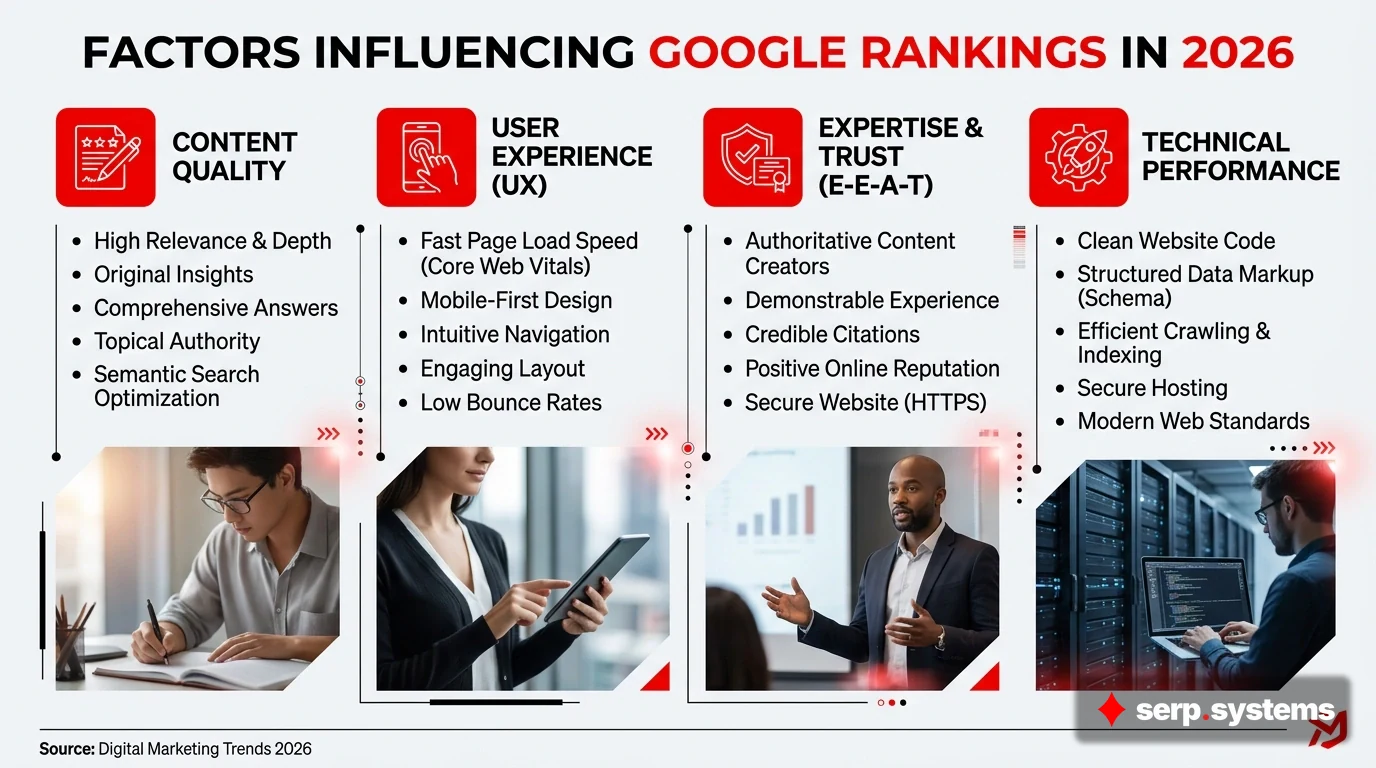
Google introduced Core Web Vitals as official ranking factors, and these metrics continue to evolve. Core Web Vitals measure user experience across three dimensions: loading speed, interactivity, and visual stability. Unlike algorithm updates that come and go, Core Web Vitals represent ongoing ranking criteria that Google refines regularly.
The specific thresholds for Core Web Vitals have changed over time. In 2024, Google adjusted the metrics and their weightings, making certain aspects more or less important. These adjustments happen without the fanfare of a full core update, but they can meaningfully affect rankings for pages on the edge of passing or failing.
Page Experience encompasses Core Web Vitals plus other factors like mobile-friendliness and HTTPS security. Google has signaled that page experience will remain a significant ranking factor through 2026 and beyond. This means optimizing for these metrics isn't a one-time project — it requires ongoing monitoring and adjustment.
Mobile-first indexing, which Google fully transitioned to in 2021, continues to shape how the search engine evaluates sites. Content must work well on mobile devices to rank well in search results. Google regularly updates its mobile indexing standards, so what constitutes "mobile-friendly" in 2026 may differ slightly from 2024.
What Changed in 2024-2026
The period from 2024 through 2026 has brought several notable shifts in Google's approach to SEO.
AI-Generated Content became a central focus for Google's guidelines. Rather than banning AI content outright, Google clarified that the source matters less than the quality and usefulness. Content created by AI is acceptable if it genuinely helps users. This represents a significant shift from earlier uncertainty about AI-written material.
E-E-A-T (Experience, Expertise, Authoritativeness, Trustworthiness) remains a core quality metric, but Google has emphasized its application more broadly. Previously, E-E-A-T was discussed mainly for "Your Money or Your Life" content, but Google has indicated it applies across all content types. This means demonstrating genuine expertise matters more than ever.
Content Quality Over Quantity has become increasingly important. Google's updates in this period have consistently rewarded comprehensive, well-researched content while demoting thin, duplicate, or low-effort material. The trend toward favoring substantive content over content created purely for SEO purposes continues to accelerate.
Search Generative Experience (SGE) and AI overviews have changed how Google presents search results. In some cases, AI-generated summaries appear at the top of results instead of traditional blue links. This shift affects how traffic flows and which pages get visibility. SEO strategies now need to account for whether content might appear in an AI overview versus traditional organic results.
Preparing Your Site for Future Updates
Since Google updates continuously, the best strategy is building a site that can weather any change.
Focus on genuine user value. Create content that solves real problems for your audience. If your content genuinely helps people, it's more likely to survive algorithm updates regardless of what specific criteria Google emphasizes next. This means understanding your audience's actual needs rather than just targeting keywords.
Keep technical fundamentals solid. Page speed, mobile responsiveness, security, and crawlability form the foundation of modern SEO. These factors rarely go out of style, so investing in technical excellence pays dividends across multiple update cycles.
Monitor your metrics consistently. Use tools to track rankings, traffic, and user behavior. When updates happen, you'll spot the impact quickly and can respond accordingly. Understanding your baseline metrics makes it easier to identify what changed and why.
Stay informed through reliable sources. Bookmark Google's official channels and check them regularly. However, balance official sources with practical analysis from experienced SEO professionals who can interpret what changes mean for different site types.
Build topical authority. Rather than creating scattered content on unrelated topics, develop deep expertise in specific subject areas. Google increasingly favors sites that demonstrate comprehensive knowledge about particular topics. This approach tends to be more resilient to updates because it's fundamentally about serving users well.
Diversify your traffic sources. While organic search is valuable, relying entirely on Google creates vulnerability. Building an audience through email, social media, and direct traffic reduces the impact of any single algorithm change on your business.
You can use tools like serp.systems to monitor ranking changes and track how your site performs across updates. These monitoring solutions help you identify patterns and respond quickly when changes occur.
Preparing for What's Next
Looking forward into late 2026 and beyond, several trends suggest where Google's guidelines might head. AI integration will continue deepening, with Google likely refining how it handles AI-generated content and how AI overviews appear in results. User experience will remain paramount, with potential new metrics or refinements to existing ones.
E-A-T will probably become even more important, especially as AI-generated content becomes more common. Demonstrating genuine human expertise and authority will differentiate high-quality sites from those relying on automation alone.
The fundamental principle underlying all Google updates remains constant: the search engine wants to show users the most relevant, helpful, and trustworthy content available. If you keep that principle at the center of your strategy, you'll be better positioned to adapt when updates arrive.
Frequently Asked Questions
How often does Google release core algorithm updates?
Google releases core algorithm updates several times per year, though the exact frequency varies. In recent years, major updates have typically arrived every few months, but Google doesn't follow a fixed schedule. The company announces these updates publicly through its Search Central Blog.
Can I get advance warning before a Google update?
Google sometimes announces major updates before they roll out, giving webmasters a few days' notice. However, not all updates receive advance notice. The best approach is monitoring official Google channels regularly and tracking your own rankings and traffic patterns to spot changes quickly.
What should I do if my rankings drop after a Google update?
First, identify whether your drop coincides with a known Google update. Check your site for technical issues, policy violations, or content quality problems. If your content is genuinely helpful and follows Google's guidelines, recovery often happens naturally over time as Google recalculates rankings.
Are AI-written articles penalized by Google?
No. Google doesn't penalize content simply for being AI-written. The search engine cares about quality and usefulness regardless of whether a human or AI created the content. AI-generated content that provides genuine value ranks normally, while low-quality AI content gets demoted like any other low-quality content.
How do Core Web Vitals affect my rankings?
Core Web Vitals are official ranking factors. Pages that meet Google's thresholds for loading speed, interactivity, and visual stability have a ranking advantage. However, excellent content can still rank well even with suboptimal Core Web Vitals, meaning they're important but not the only factor that matters.
Where can I find the latest Google SEO guidelines?
The Google Search Central documentation contains the most current official guidelines. The Google Search Central Blog announces major updates and changes. These sources are updated regularly to reflect current best practices.