
Updated May 08, 2026 · 10 min read
Google Algorithm Updates in 2024
Google's 2024 algorithm updates fundamentally reshaped search rankings—the March core update hit low-quality content hard, while new rules for AI-generated material and the Helpful Content System changed what ranks. Here's what changed and how to adapt.

Google rolled out several major algorithm changes throughout 2024 that reshaped how search results are ranked and displayed. Understanding these updates is critical for anyone working with search visibility, content strategy, or SEO. The changes ranged from how AI-generated content is handled to how helpful information is prioritized in search results.
Table of Contents
- Core Updates and Their Impact
- How Google Handles AI-Generated Content
- The Helpful Content System Explained
- Search Generative Experience Changes
- E-E-A-T and Expertise Signals
- Spam and Quality Enforcement
- Tracking and Monitoring Algorithm Changes
- What Changed for Different Content Types
- Preparing for Future Updates
- Frequently Asked Questions
Core Updates and Their Impact
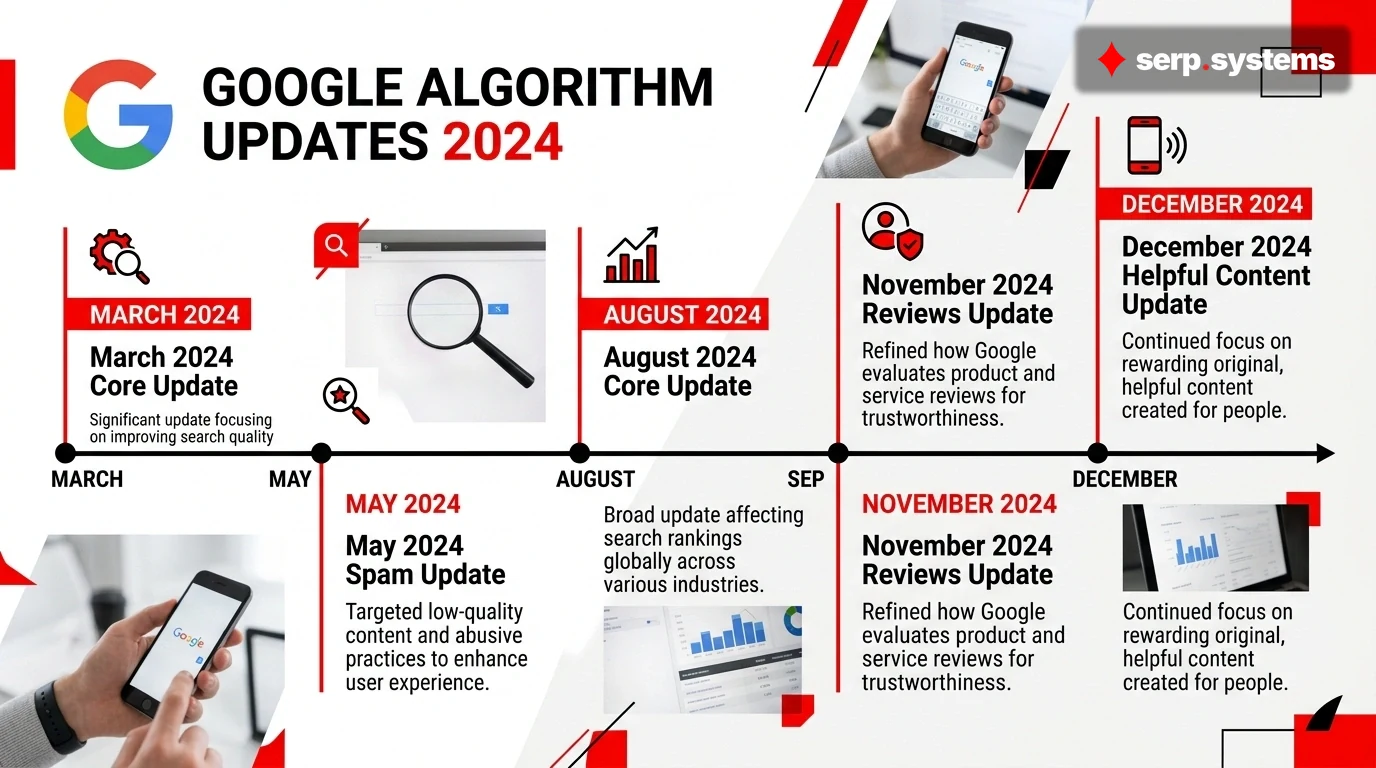
Google released multiple core updates in 2024 that reshaped ranking behavior across search. These weren't minor tweaks—they represented substantial shifts in what Google considers valuable content worth ranking at the top of search results.
The March 2024 core update was one of the most significant. This update focused on reducing low-quality content in search results while promoting pages that demonstrated genuine expertise and originality. Many sites that relied on thin content, automated content generation, or content farms saw significant traffic declines. The update affected a broad range of industries, though it hit certain niches particularly hard.
Following the March update, Google released additional refinements in April and May. These follow-up updates continued the trajectory of the March changes but targeted specific patterns Google had identified as problematic. Sites with excessive affiliate content, AI-generated posts without human oversight, and pages designed purely for search engine visibility faced particular challenges.
How Google Handles AI-Generated Content
The question of artificial intelligence-generated content became central to Google's 2024 strategy. This wasn't about banning AI content outright. Instead, Google made clear that AI-generated material needed to meet the same quality standards as human-written content, and it had to provide genuine value to readers.
Google's stance was straightforward: the origin of content matters far less than its usefulness. A well-researched, thoroughly fact-checked article written by AI could rank well. Conversely, poorly researched human-written content would struggle. The key differentiator was whether the content answered user questions comprehensively and accurately.
What changed in 2024 was Google's ability to detect and penalize low-effort AI content at scale. The search engine improved its systems for identifying content that appeared to be automatically generated without human review or editing. Sites publishing bulk AI content without quality control faced algorithmic penalties. Additionally, Google became stricter about content that used AI to quickly produce numerous articles on similar topics without adding new perspectives or information.
The practical takeaway: AI tools are acceptable for drafting, editing, and research assistance. But publishing AI output directly without human review, fact-checking, and originality work became increasingly risky from a search visibility standpoint.
The Helpful Content System Explained
Google introduced what it called the "Helpful Content System" as a core component of 2024's ranking approach. This system was designed to identify pages that actually helped users versus pages created primarily to rank in search engines.
Helpful content, according to Google's definition, demonstrates these characteristics: it shows clear evidence of expertise or lived experience, it answers the specific question a user is asking, it provides information that's difficult to find elsewhere, and it includes original research or insights. Pages lacking these qualities—even if they're well-written—struggle to rank well.
The system affected both broad web search and Google's specialized verticals like Google News and Google Scholar. A page that might have ranked decently in 2023 could drop significantly in 2024 if it didn't meet the helpfulness threshold. This change particularly impacted review sites, how-to guides, and informational content.
Google's helpful content system also became more sophisticated at recognizing when content was written specifically for search engines rather than for actual human readers. Pages stuffed with keywords, articles with unnecessary length, and content that prioritized search optimization over user experience all faced reduced visibility.
Search Generative Experience Changes
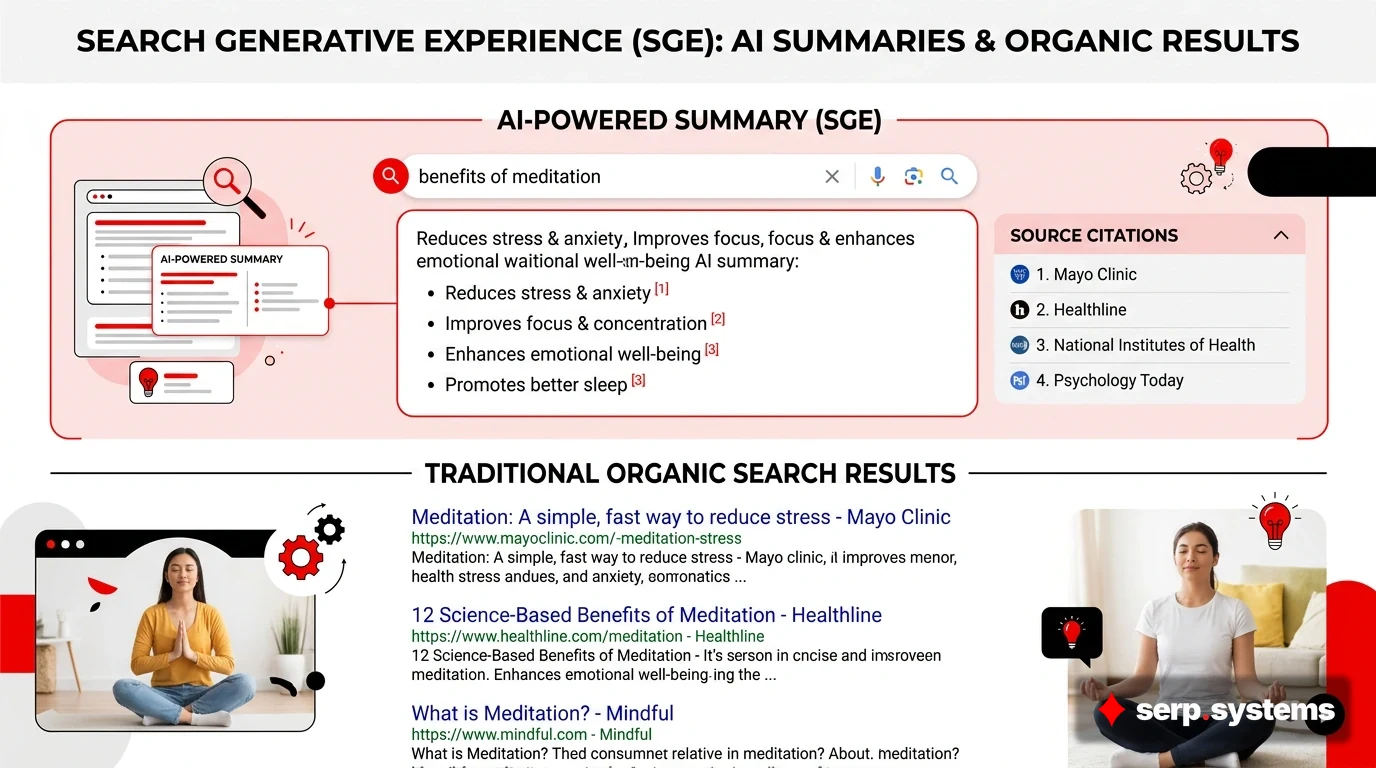
Google's integration of generative AI into search results continued evolving in 2024. The Search Generative Experience (SGE) feature, which displays AI-generated summaries at the top of search results, became more prominent and refined. This had direct implications for organic search traffic.
When Google displays an AI-generated answer at the top of the search results page, users often get their answer without clicking through to any website. This meant that even high-ranking pages received less traffic than they might have in previous years. Some publishers saw significant traffic drops not because their rankings changed, but because SGE answers reduced click-through rates.
However, the SGE also created opportunities. Pages that were cited by Google's AI summaries received visibility and brand recognition even without direct clicks. Additionally, Google began showing which sources its AI summaries drew from, creating a new form of attribution. Sites with strong topical authority and clear expertise were more likely to be cited in these AI-generated responses.
E-E-A-T and Expertise Signals
Google's E-E-A-T framework—Experience, Expertise, Authoritativeness, and Trustworthiness—became even more central to ranking factors in 2024. Google's systems for evaluating these signals became significantly more sophisticated.
Experience now meant demonstrable, hands-on familiarity with a topic. A writer reviewing a product needed to have actually used it. Someone writing about a medical condition should have personal or professional experience with it. This pushed back against the trend of content created by writers with no real connection to their subject matter.
Expertise required more than general knowledge. Google's systems looked for credentials, certifications, and demonstrated mastery. A financial advisor writing about investments carried more weight than a general writer covering the same topic. For medical content, pages authored by healthcare professionals ranked better than those without such credentials.
Authoritativeness involved building a reputation in a specific field. Websites that consistently published accurate, well-researched content on a narrow topic became recognized as authorities. This authority then extended to other content on the same site covering related topics.
Trustworthiness became harder to fake in 2024. Google looked for transparent author information, clear sourcing, updated publication dates, and evidence that the site actively maintained its content. Sites with poor security, outdated information, or opaque ownership structures faced ranking penalties.
Spam and Quality Enforcement
Google took an increasingly aggressive stance against spam and low-quality content in 2024. The search engine updated its spam policies multiple times throughout the year to address emerging tactics used to manipulate rankings.
Scaled content abuse became a primary focus. This referred to situations where sites published large quantities of content primarily to rank for many search queries rather than to serve users. Google's systems became better at identifying when a site was publishing content at an unnatural scale without corresponding increases in editorial resources or expertise.
Expired domain abuse—purchasing old domains with existing authority to publish spam content—faced stricter enforcement. Google recognized patterns where newly purchased domains suddenly published content misaligned with the domain's history, and these sites faced penalties.
Affiliate content received particular scrutiny. While affiliate marketing itself wasn't penalized, sites that published thin affiliate content without genuine product experience or comparison value saw ranking declines. The key distinction was whether the content genuinely helped users make purchasing decisions or simply existed to generate affiliate commissions.
Cloaking and sneaky redirects also faced enhanced detection. These techniques, where pages showed different content to search engines versus users, became easier for Google to identify and penalize.
Tracking and Monitoring Algorithm Changes
Staying informed about algorithm updates became more important than ever in 2026. Google continued its practice of announcing major core updates, but the effects could take weeks to fully roll out across all search results. Sites experienced volatility during these rollout periods as rankings shifted.
Several approaches helped publishers understand how updates affected their traffic. Monitoring search visibility across important keywords showed whether a site gained or lost ground. Analyzing competitor performance provided context—if everyone in a niche lost traffic, a core update was likely responsible rather than a site-specific issue.
Traffic and ranking data from multiple sources gave a clearer picture than relying on a single metric. Some keywords might recover quickly after an update while others remained depressed, suggesting the update targeted specific content types rather than entire niches.
Content audits became essential post-update. Publishers examined pages that lost rankings to understand what changed. Did the content lack expertise signals? Was it too thin? Did competitors provide more comprehensive answers? These audits informed decisions about which pages to improve, which to consolidate, and which to remove entirely.
What Changed for Different Content Types
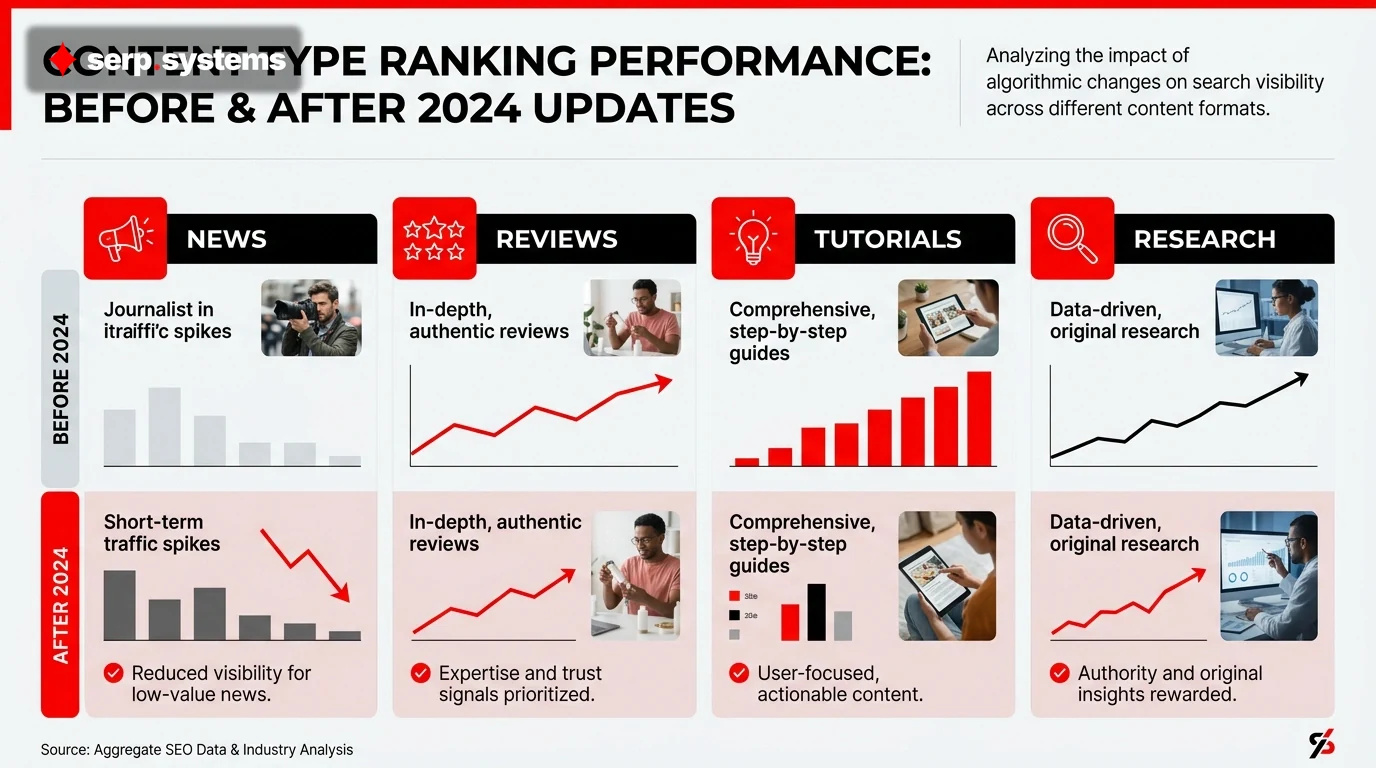
The 2024 updates affected different content types with varying intensity. News and current events content saw less impact from the helpful content system since timeliness is inherently valuable. However, evergreen informational content faced stricter scrutiny.
Product review content experienced significant changes. Google wanted reviews to demonstrate actual product experience and provide genuine comparative value. Generic reviews that simply listed features without real insight performed poorly. The best-performing reviews combined personal experience, testing data, and honest assessment of pros and cons.
Tutorial and how-to content needed to be comprehensive and accurate. Incomplete guides or guides that skipped important steps faced ranking penalties. The most successful how-to content provided step-by-step instructions that readers could actually follow successfully.
Academic and research-based content benefited from the updates. Pages that cited sources, included original research, or synthesized information from multiple authoritative sources ranked better than pages that simply summarized existing information without adding new value.
Preparing for Future Updates
While predicting specific future updates is impossible, the direction of 2024's changes suggests what to expect going forward. Google will continue prioritizing content quality, expertise, and usefulness over technical optimization tricks. The company will refine its ability to detect low-effort content at scale, whether human-written or AI-generated.
Sites should invest in building genuine topical authority rather than trying to rank for as many keywords as possible. This means publishing in-depth, well-researched content on specific topics and establishing credentials in those areas. It means maintaining high editorial standards and actively removing or updating outdated information.
Building transparent author profiles and demonstrating expertise became increasingly important. Readers and search engines alike want to know who's behind the content and why they're qualified to write about it. Investing in author credibility paid dividends in search visibility.
The relationship between content strategy and search visibility became more aligned in 2024. The best strategy for ranking well in Google was simply to create excellent content that genuinely helps your audience. When those goals align, everything becomes simpler. You can use SERP tracking tools to monitor how your content performs and identify opportunities to improve its relevance and quality.
Frequently Asked Questions
Which Google algorithm update in 2024 had the biggest impact?
The March 2024 core update was the most significant, affecting broad swaths of the search results. It specifically targeted low-quality content and content created primarily for search engines rather than users. Many sites experienced substantial traffic changes during this update's rollout.
How does Google detect AI-generated content?
Google doesn't have a single detector for AI content. Instead, it evaluates whether content meets quality standards regardless of origin. The company's systems identify patterns common in low-effort AI content, such as generic phrasing, lack of original research, or bulk publication without human review.
Does having an author byline help with rankings?
Yes, transparent author information with demonstrated expertise helps rankings. Google's E-E-A-T evaluation includes authoritativeness, which is strengthened by clear author credentials and a track record of accurate, helpful content on a topic.
How long does it take to recover from an algorithm update?
Recovery varies depending on the cause of the ranking loss. If a site was penalized for spam, it might take weeks to months to recover after addressing the issues. If rankings dropped due to increased competition or content quality concerns, recovery depends on how thoroughly the site improves its content.
Should I still focus on keywords and backlinks?
Yes, but they're no longer sufficient on their own. Keywords remain important for relevance, and backlinks still signal authority. However, content quality, expertise, and usefulness are now the primary ranking factors. Technical optimization and link building should support a strong content strategy, not replace it.
How can I tell if an update affected my site?
Compare your traffic and rankings before and after the update date. Look at whether changes affected specific content types or topics. Check competitor performance to see if the entire niche was affected or if your site was hit harder than competitors. Tools that track search visibility can help identify patterns.