Updated April 14, 2026 · 5 mins
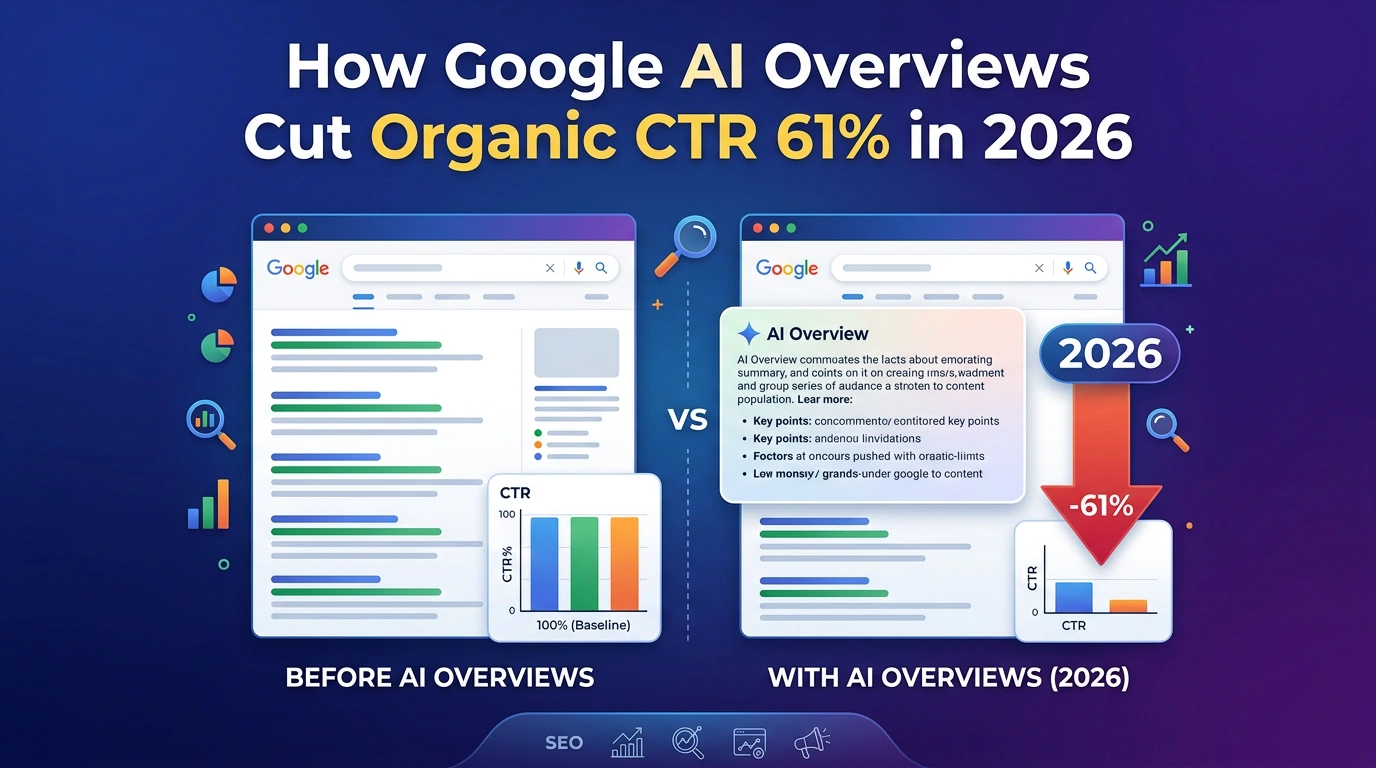
How Google AI Overviews Cut Organic CTR 61% in 2026
Organic CTR for Google AI Overview queries crashed 61% since mid-2024, while paid clicks plunged 68%. But brands cited in AI Overviews earn 35% more organic clicks — here's how to adapt.

How Google AI Overviews Cut Organic CTR 61% in 2026
Organic click-through rates for informational queries featuring Google AI Overviews fell 61% since mid-2024, while paid CTRs on those same queries plunged 68%, according to recent research. This dramatic shift represents a fundamental change in how search works and what success looks like for brands competing online.
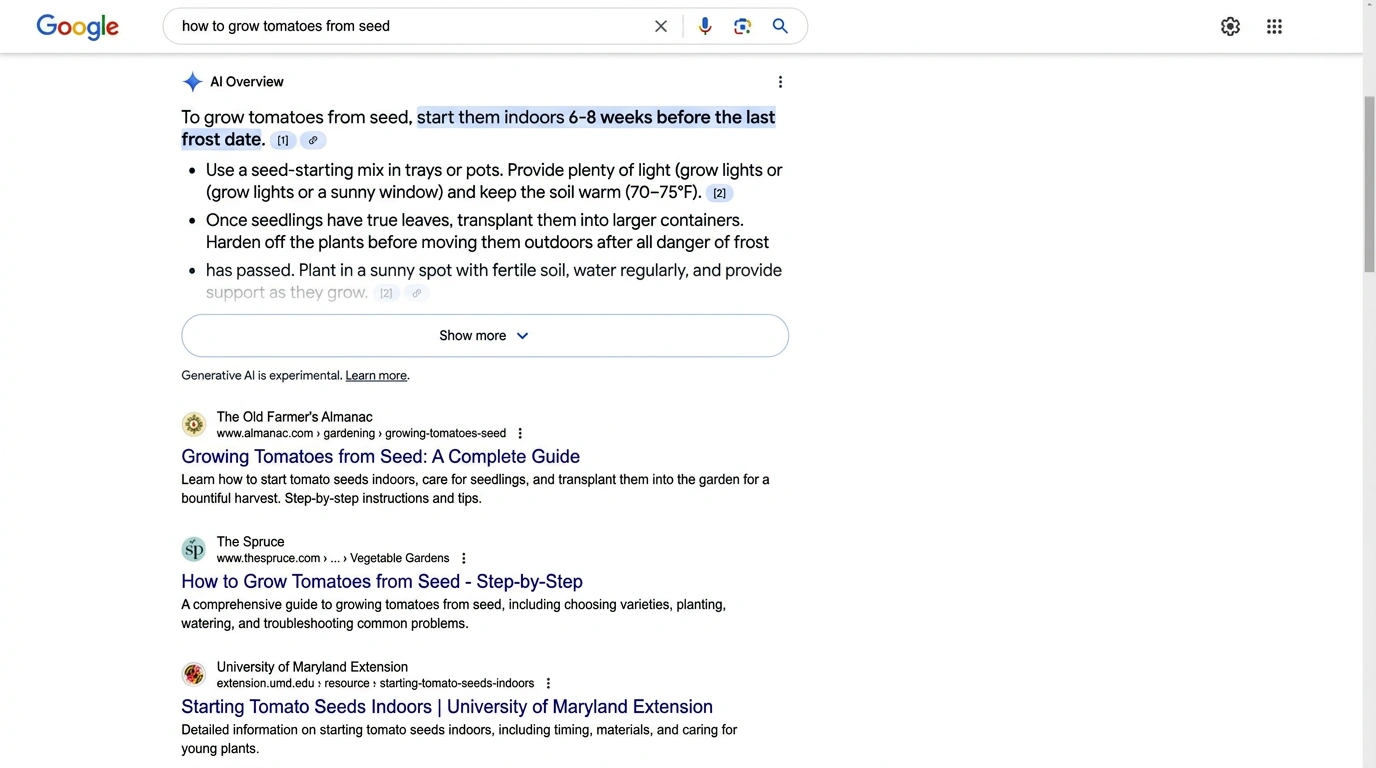
The numbers tell a stark story. Organic CTR plummeted 61% (from 1.76% to 0.61%) for queries with AI Overviews, while paid CTR crashed 68% (from 19.7% to 6.34%). But the impact doesn't stop there. Even queries without AI Overviews show a 41% organic CTR decline, suggesting users are clicking less everywhere, not just where summaries appear.
What's Driving the CTR Collapse?
AI Overviews trigger on approximately 48% of all Google search queries as of March 2026, with rates varying by query type: 88% for healthcare, 83% for education, and 37% for entertainment. When Google answers the question directly on the search results page, users have no reason to click through to your website.
This is zero-click search at scale. Zero-click searches now account for 65-70% of all Google queries in early 2026. The problem intensifies because informational and educational content across all industries faces the most significant impact, with queries seeking factual answers, definitions, tutorials, comparisons, or how-to guidance triggering AI Overviews most frequently.
The shift happened fast. July 2025 showed particularly severe drops, with paid CTR crashing from roughly 11% to 3% in a single month. This wasn't gradual erosion—it was a market shock.
Who Gets Hit Hardest?
Not all content suffers equally. E-commerce queries trigger AI Overviews only 4% of the time, down from 29% at initial rollout. Brands selling products have some protection. But if you create informational content—guides, how-tos, comparisons—you're in the crosshairs.
Informational and evergreen content is hardest hit, with how-to posts, definition guides, comparison content, and listicles targeting high-volume informational queries being the primary casualties. Meanwhile, breaking news content is the notable exception, growing 103% over the same period.
The damage extends to publishers. The median publisher experienced a 10% year-over-year traffic decline in H1 2025, with non-news content sites dropping 14% while news publishers dropped 7%.
The One Path Forward: Getting Cited
Here's where the story shifts from crisis to opportunity. Brands cited in AI Overviews earned 35% more organic and 91% more paid clicks than those not cited. Being mentioned in Google's AI summary is worth more than a top-10 ranking without citation.
Brands cited in AI Overviews earn 35% more organic clicks and 91% more paid clicks. This changes the entire game. You're no longer competing for position one. You're competing to be the trusted source that Google's AI trusts enough to reference.
Traditional metrics like clicks and traffic are no longer enough, success now requires tracking share of voice, visibility in AI responses, and citation frequency. This is the shift every marketer needs to understand.
Generate Your First Article Free
5 free articles/month. Full SERP analysis, NLP optimization, and content scoring included.
Try serp.systems Free →Why Clicks Are Falling on Non-AI Queries Too
The decline isn't limited to queries with AI Overviews. Even non-AIO queries got weaker, which means the shift is broader than one SERP feature. Users are changing how they search, not just responding to one feature.
Search engine results pages have undergone a fundamental transformation between January 2025 and January 2026, with paid search advertisements capturing double the click share while organic search results experience steep declines across every analyzed vertical. Organic click share dropped between 11 and 23 percentage points year-over-year, while text ads gained 7 to 13 points.
Consider the numbers by category. Headphones fell from 73% organic click share to 50%, jeans dropped from 73% to 56%, greeting cards fell from 88% to 75%, and online games went from 95% to 84%. That's not incremental drift. It's structural change.
Share of Voice Replaces Click-Based Metrics
Because clicks are disappearing, the metrics that matter have changed. Your competitive position across organic search and AI discovery, connected in one place, allows you to optimize once and win everywhere.
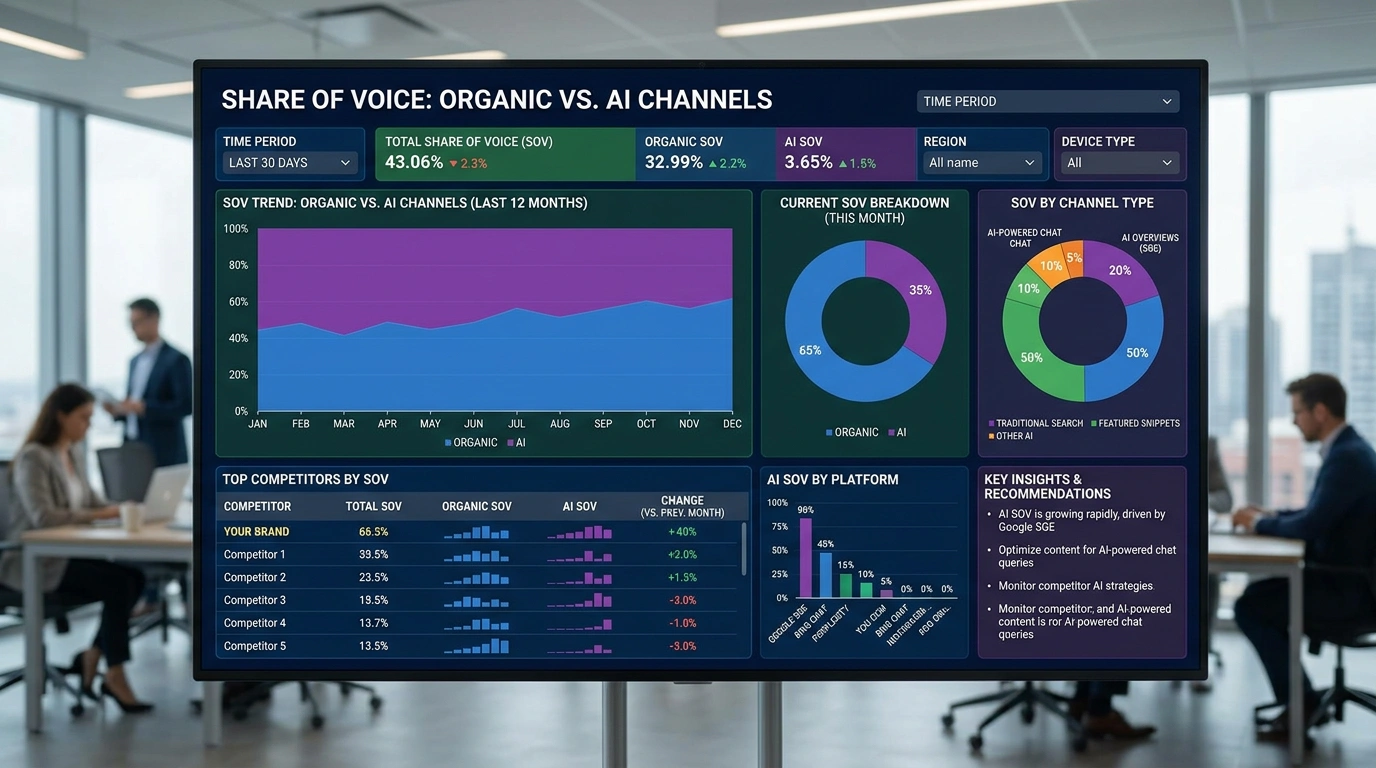
SEO Share of Voice is about visibility, answering a simple question: Out of all the possible organic search results for your target keywords, what proportion does your brand occupy compared to competitors? But in 2026, this extends beyond traditional rankings.
Specialized tools make it possible to follow the AI "share of voice" and the quotations in the generative responses, measuring how many times your brand/site is mentioned in AI responses compared to your competitors.
How to Get Cited in AI Overviews
When you update existing content with direct answers, current statistics, and better structure, AI systems often incorporate those changes within their next major crawl or training update, with ChatGPT and similar models showing updates within weeks and Google AI Overviews typically reflecting changes faster since they draw from current search index data.
Speed matters. Most teams see measurable shifts within 4-8 weeks of restructuring high-value pages, with AI models re-indexing content on a rolling basis, and definition-first rewrites and evidence grounding producing the fastest wins because they don't require new research, just restructuring of existing material.
The content that wins is specific. AI can summarize informational content, but it can't replicate original research, case studies with real client results, proprietary data, or first-person expert analysis—these are your moat.
What This Means for Your SEO Strategy
You can't rely on traditional rankings anymore. For position 1 without AI Overviews, 35-40% is strong, but with AI Overviews present, 15-20% is more realistic. The benchmark has shifted.
In 2026, AI systems care less about ranking for one keyword and more about whether your site consistently demonstrates expertise across a topic, involving mapping entire topic areas, rather than optimizing for one or more particular terms.
Tools like serp.systems help track this new landscape. You need visibility across both traditional organic results and AI discovery surfaces. One platform that shows your competitive position across both helps you optimize without jumping between dashboards.
Consistent share of voice optimization can transform your brand from nearly invisible to category leader within 12 months.
The Real Opportunity
The CTR collapse is real. The traffic losses are documented. But brands that adapt early are seeing growth. 63% of businesses reported that Google AI Overviews have positively impacted their organic traffic, visibility, or rankings since the May 2024 rollout.
The difference? They stopped optimizing for clicks and started optimizing for trust, citation, and authority. They measure share of voice instead of traffic volume. They create content that AI systems want to reference, not just content that ranks.
FAQ
How much has organic CTR actually dropped due to AI Overviews?
Organic CTR plummeted 61% (from 1.76% to 0.61%) for queries with AI Overviews. However, the impact varies by industry and query type. Google AI Overviews reduce organic CTR by 15-46% depending on query type, with the most rigorous studies confirming a 46.7% relative decline in clicks across 68,000 real queries.
Will AI Overviews eventually affect all search queries?
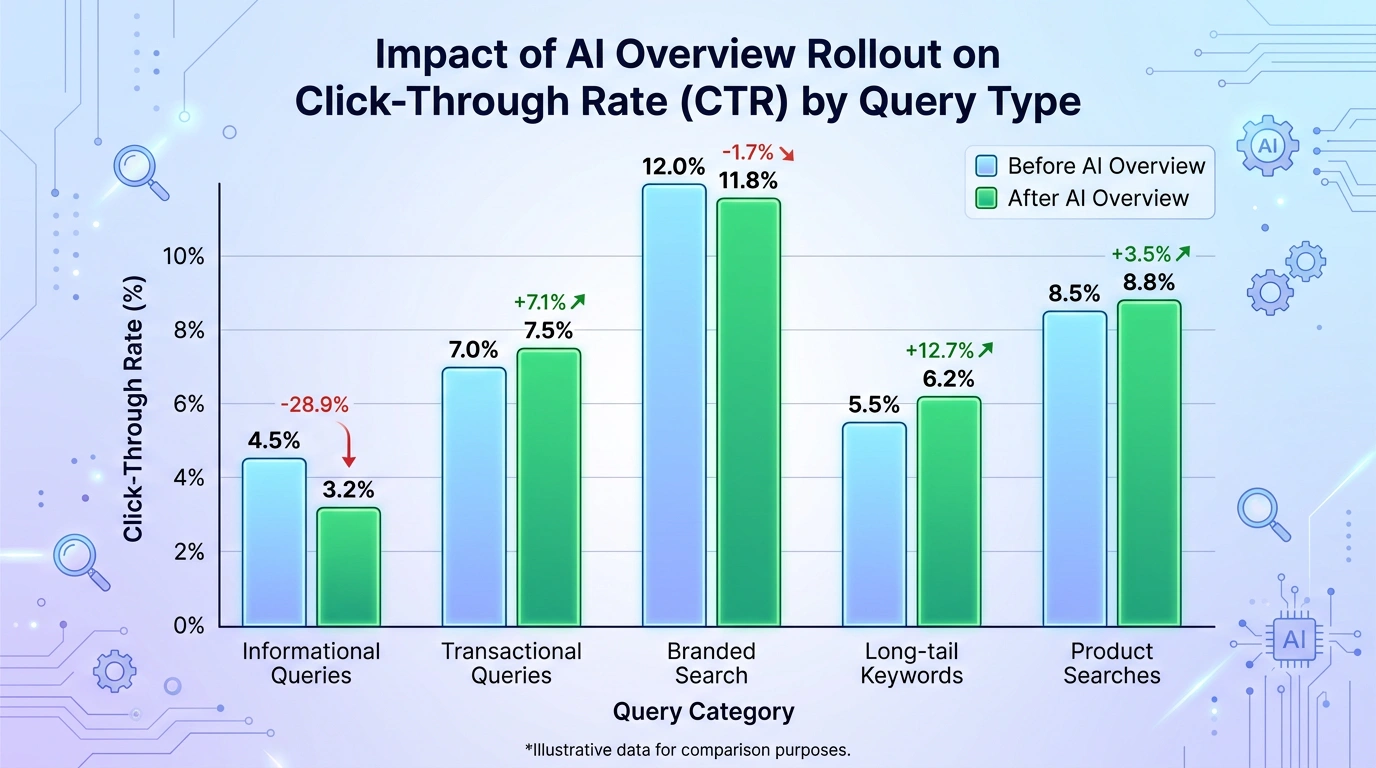
No. Transactional and navigational queries have very low trigger rates (under 2%), while informational queries are most affected, with trigger rates reaching 80 to 88% in some industries. Branded searches and product-specific queries remain relatively protected.
What metric should I track instead of CTR?
Success now requires tracking share of voice, visibility in AI responses, and citation frequency. Share of voice measures your brand's portion of total visibility across your target keywords compared to competitors. AI citation frequency shows how often AI systems reference your brand.
How quickly can I improve my visibility in AI Overviews?
Most teams see measurable shifts within 4-8 weeks of restructuring high-value pages, with AI models re-indexing content on a rolling basis, and definition-first rewrites and evidence grounding producing the fastest wins.
Are brands losing traffic to AI Overviews getting compensated elsewhere?
Partially. AIO citations represent one of the few remaining mechanisms for maintaining competitive separation in search, with brands cited in AI Overviews achieving 35% higher organic CTR and 91% higher paid CTR compared to non-cited competitors on the same queries. The key is getting cited.
Should I abandon traditional SEO for AI SEO?
No. Traditional SEO is not dead and remains the foundation that AI SEO builds upon, with both needed for comprehensive visibility. The strategy combines traditional optimization with AI-specific tactics like ensuring content is structured for easy citation.