
Updated May 18, 2026 · 10 min read
How Do I Choose Between Different AI Article Generators in 2026?
Content teams now have dozens of AI article generators to choose from, each with different strengths in speed, quality, and cost. Here's how to evaluate them based on your actual workflow needs — not marketing hype.

Picking the right AI article generator has become essential for content teams managing multiple projects. With dozens of tools available, each claiming speed and quality, the choice depends on what matters most to your workflow — whether that's cost, output quality, integration capabilities, or specific features like SEO optimization.
Table of Contents
- Understanding Your Core Needs
- Key Features to Compare
- Speed vs. Quality Trade-offs
- Pricing Models and Budget Fit
- Integration and Workflow Compatibility
- Content Quality and Customization
- Evaluating Real-World Performance
- Making the Final Decision
- Frequently Asked Questions
Understanding Your Core Needs
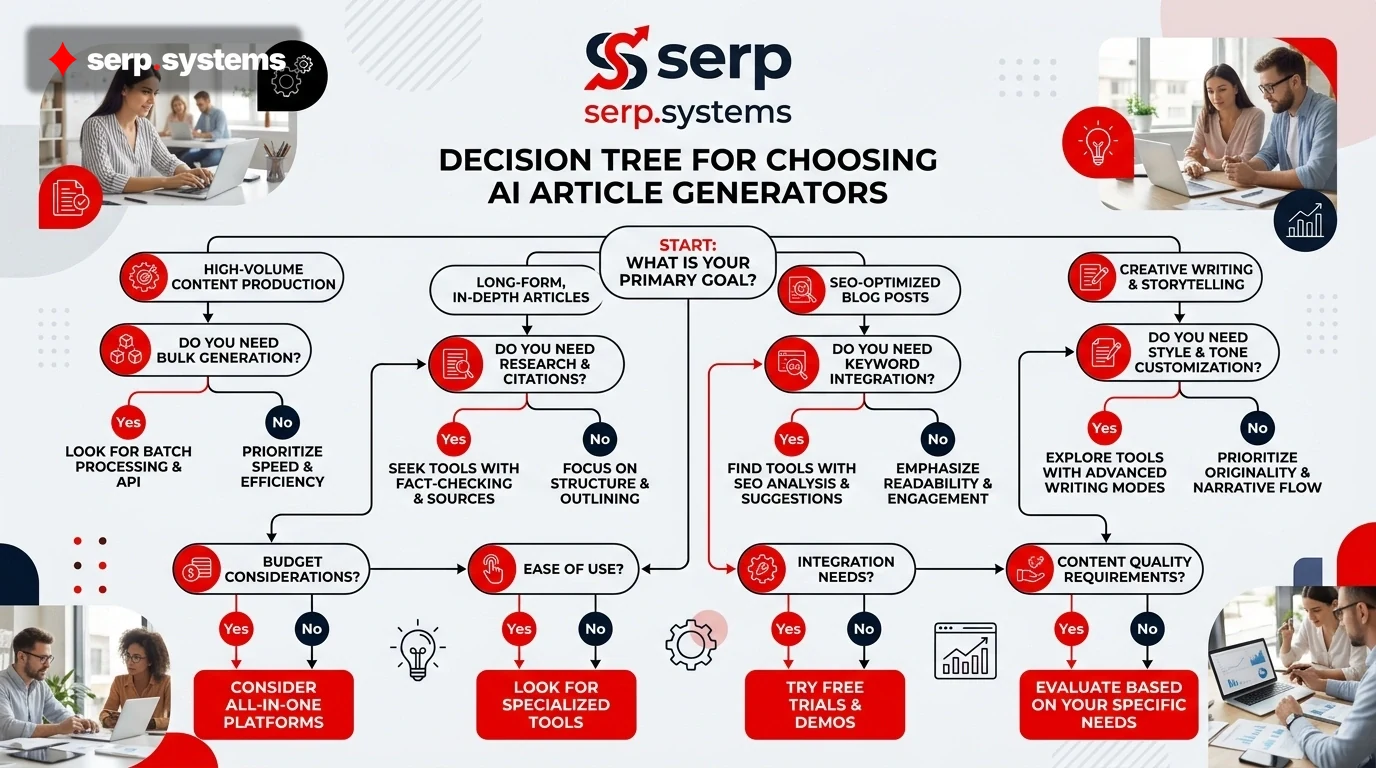
Before comparing specific tools, identify what you actually need from an AI article generator. Are you producing blog posts, product descriptions, news summaries, or long-form guides? The answer shapes which generator fits best.
Content teams often make the mistake of choosing based on hype rather than actual workflow requirements. Some generators excel at quick, short-form content but struggle with depth. Others produce polished long-form articles but take longer and cost more per piece. Start by listing your typical article length, publishing frequency, and quality standards.
Your team size matters too. Solo content creators benefit from different features than agencies managing dozens of writers. A single freelancer might prioritize ease of use and affordability, while an agency needs batch processing, team collaboration, and detailed analytics.
Key Features to Compare
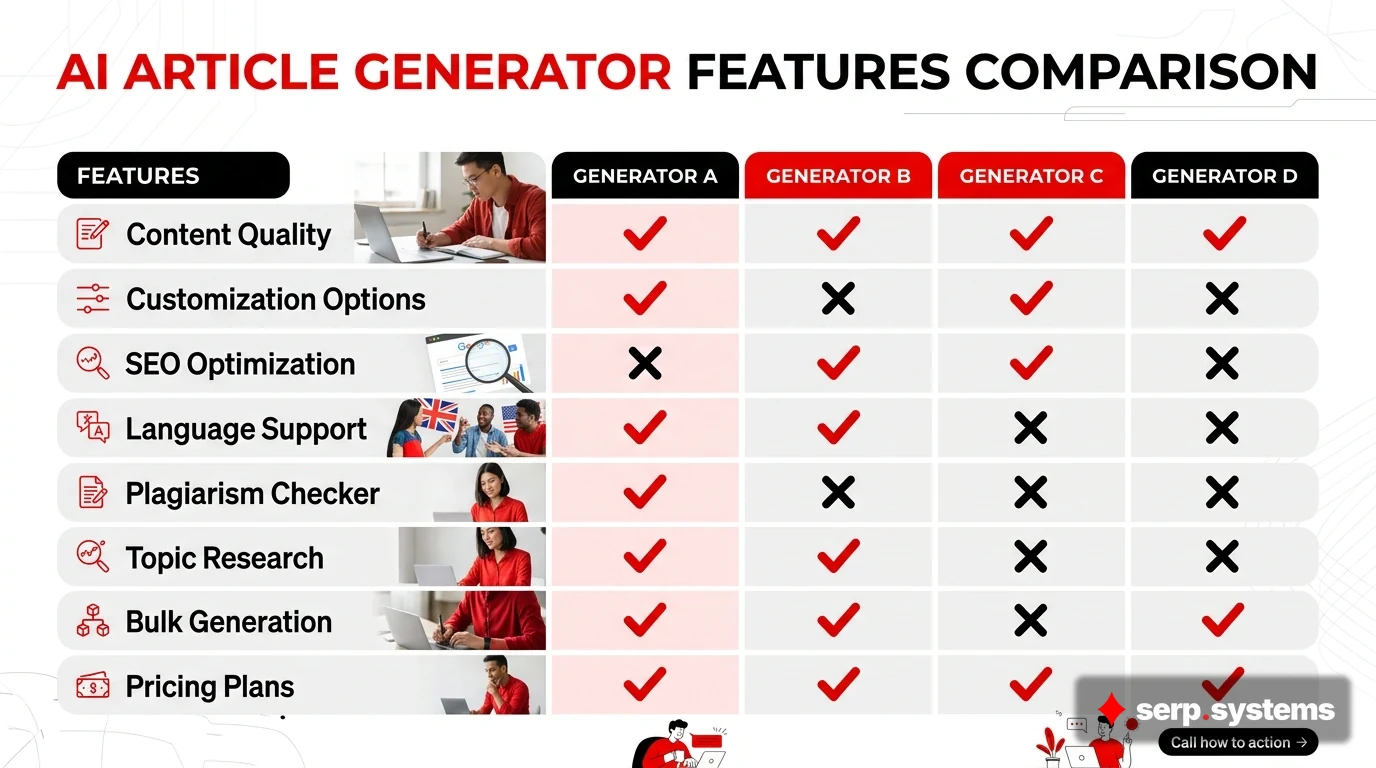
When evaluating AI article generators, focus on these core capabilities that directly impact your output quality and workflow efficiency.
Output Customization and Control
The best generators let you specify tone, length, target audience, and style before generation starts. Some tools offer basic templates, while others provide granular control over every aspect. You should be able to request conversational, professional, technical, or casual tones depending on your audience.
Look for tools that support multiple languages and allow you to set keyword density targets. SEO-focused generators let you specify target keywords and ensure they appear naturally throughout the content. This matters significantly if organic search traffic drives your business.
Research and Source Integration
Quality AI generators pull from current information rather than relying solely on training data. Tools that integrate with real-time search results, academic databases, or your own knowledge base produce more accurate, cited content. Some generators can access web sources directly, while others require you to provide reference material.
The ability to cite sources properly is increasingly important. Readers and search engines both value content backed by real research. Generators that automatically format citations or provide attribution links give you credibility advantages.
Brand Voice and Consistency
Tools with brand voice customization let you define how your content should sound. You can upload style guides, previous articles, or brand guidelines so the generator maintains consistency across all output. This prevents the robotic, generic quality that makes AI-generated content obvious.
Some platforms allow you to create custom brand profiles that persist across multiple generations. This saves time and ensures every piece aligns with your voice without manual editing.
Speed vs. Quality Trade-offs
Faster doesn't always mean better when it comes to AI article generation. Understanding the relationship between speed and output quality helps you choose appropriately.
Most generators can produce a 1,500-word article in 30 seconds to 3 minutes. The fastest tools often use simpler models that require more human editing. Slower generators typically employ more advanced models that produce publication-ready content with fewer revisions needed.
Consider your editing workflow. If your team spends 30 minutes editing quick-generated articles, you're not actually saving time compared to a tool that takes 2 minutes but requires only 5 minutes of review. Calculate total time-to-publish, not just generation time.
Quality also varies based on prompt specificity. Detailed, well-structured prompts yield better results across all generators. A vague request like "write about AI tools" produces generic content. A specific request like "write a 1,500-word comparison of AI article generators for content teams, including pricing and feature analysis" gets much better results.
Pricing Models and Budget Fit
AI article generators use several pricing approaches, each with different economics depending on your volume.
Pay-per-article models charge a fixed price per generated piece, typically $5–$50 depending on length and features. This works well for occasional users or those testing the tool. You avoid monthly commitments but pay more per article at scale.
Subscription plans offer monthly access with a set number of articles or credits. Prices range from $30–$500+ monthly depending on generation limits and features. Teams publishing 20+ articles monthly usually find subscriptions cheaper than pay-per-use.
Credit-based systems give you monthly credits that convert to articles based on length and features. A 1,500-word article might cost 3 credits while a 500-word piece costs 1 credit. This hybrid model works for variable publishing schedules.
Some generators charge extra for premium features like advanced customization, multiple languages, or integration access. Understand what's included in base pricing before comparing total cost.
Calculate your monthly publishing volume and compare total cost across pricing models. A tool costing $50/month with 20 included articles beats a $5/article tool if you publish 15+ pieces monthly.
Integration and Workflow Compatibility
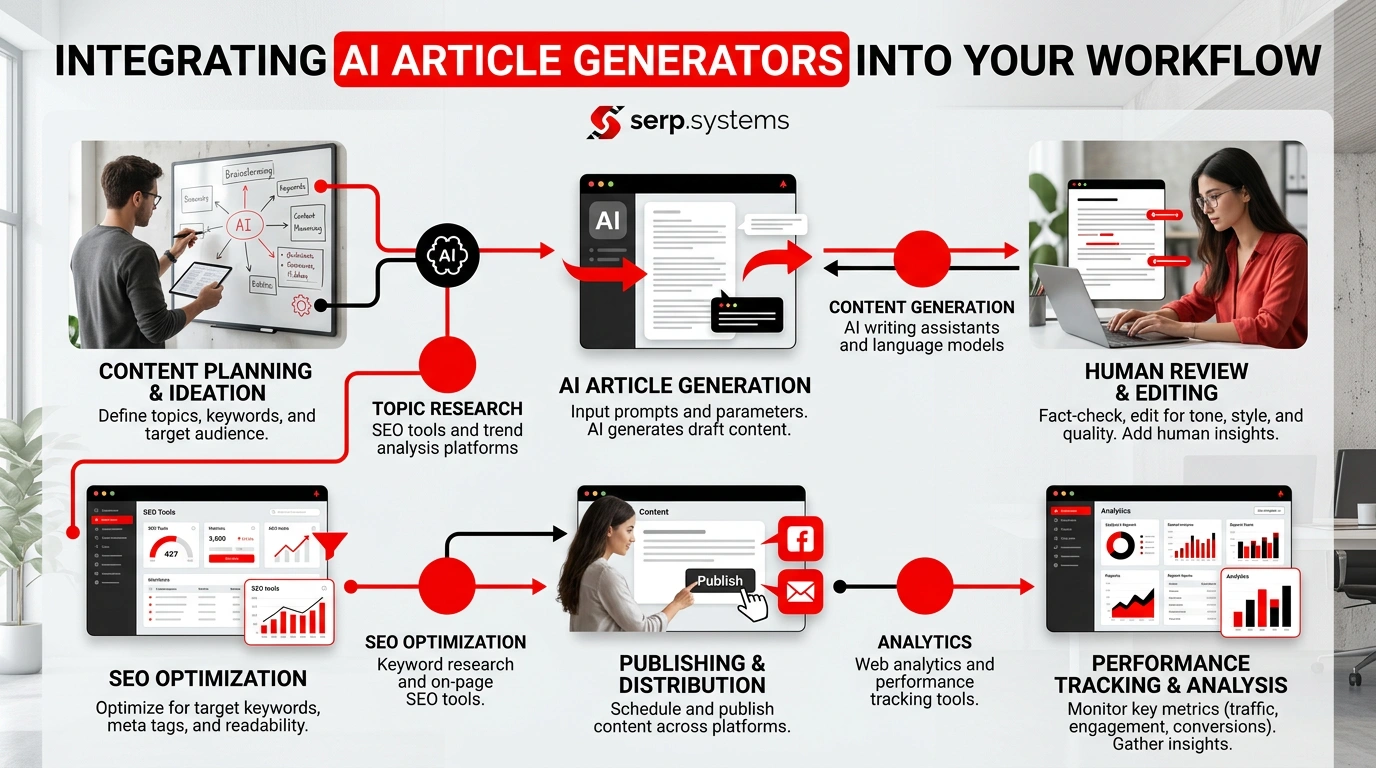
The best generator is useless if it doesn't fit into your existing workflow. Check whether tools integrate with your CMS, project management platform, or content calendar.
Popular integrations include WordPress, Zapier, Make (formerly Integromat), Google Docs, and Notion. Tools that connect directly to your publishing platform save hours of copy-pasting and formatting. Some generators can publish directly to your blog, while others require manual import.
API access matters if you're building custom workflows. Developers can use APIs to automate article generation as part of larger systems. This is especially valuable for agencies managing multiple client sites.
Batch processing capabilities let you generate multiple articles simultaneously. If you publish weekly content calendars, batch generation saves significant time compared to creating articles one at a time.
Version control and revision history are underrated features. Being able to see what changed between generations and revert to earlier versions prevents accidental loss of good content.
Content Quality and Customization
Raw AI output quality varies dramatically between generators. Some produce publication-ready content while others require substantial editing.
Factual accuracy is critical. Generators that cite sources or integrate with real-time data tend to produce more accurate information. Tools relying only on training data occasionally generate plausible-sounding but false claims. This risk increases with specialized topics like medical, legal, or financial content.
Originality matters for SEO and legal reasons. Check whether your generator produces unique content or regurgitates similar text across users. Plagiarism detection tools can verify originality, but it's better to choose a generator known for unique output.
Tone consistency separates good generators from great ones. Your brand voice should come through clearly. Test generators with your actual brand guidelines before committing. Most offer free trials that let you evaluate output quality.
Customization depth determines how much editing you'll do. Generators letting you specify structure, examples, data points, and sources produce more aligned content. Those forcing you to accept generic templates require more revision.
Some tools include built-in editing features like grammar checking, plagiarism detection, and SEO scoring. These reduce manual editing time and improve final quality.
Evaluating Real-World Performance
The only way to truly evaluate a generator is testing it with your actual content needs. Most tools offer free trials or sample generations.
Create test prompts matching your typical articles. Generate content, measure how much editing it needs, and time the entire process from generation to publication. Compare this across multiple tools.
Pay attention to how well the generator handles your specific requirements. If you write for a niche industry, test whether it understands technical terminology. If SEO is critical, verify that keyword integration feels natural rather than forced.
Read user reviews and case studies, but remember that experiences vary. A tool that works perfectly for news summaries might struggle with product descriptions. Your use case is unique.
Ask whether the tool's approach matches your values. Some generators prioritize speed over accuracy, others focus on quality. Some are transparent about AI involvement, others hide it. Choose based on what aligns with your standards.
Making the Final Decision
Start by listing your non-negotiable requirements. Must it integrate with WordPress? Does it need to handle multiple languages? Is pricing flexibility essential? Narrow your options based on these hard requirements first.
Then evaluate the remaining tools on secondary factors like speed, customization, and support quality. Read documentation and contact support with questions. Responsive, helpful support teams indicate companies that care about customer success.
Consider starting with a trial or free tier before committing to annual plans. You'll learn whether the tool actually fits your workflow, not just whether it sounds good in marketing materials.
Finally, remember that no generator eliminates the need for human review. Plan time for editing, fact-checking, and brand voice adjustments. The best generators reduce editing time significantly but don't replace human judgment entirely.
Frequently Asked Questions
What's the difference between AI article generators and content management systems?
AI article generators create content automatically using machine learning. Content management systems like WordPress organize and publish that content. Many generators integrate with CMSs but serve different purposes. Generators handle creation while CMSs handle organization and distribution.
Can I use AI-generated articles directly without editing?
Some high-quality generators produce publication-ready content, but most benefit from human review. At minimum, you should verify facts, check tone consistency, and ensure proper citations. Treating AI output as a first draft rather than final product typically yields better results.
How do I ensure AI-generated content ranks well in search engines?
Choose generators with SEO features like keyword optimization, metadata generation, and readability scoring. Specify your target keywords and audience in your prompts. Review the generated content for keyword density (1-3% is typical) and natural integration. Ensure proper heading structure and internal linking. Finally, verify that all claims are factually accurate and properly cited.
Which generator is best for beginners?
Tools with simple interfaces and clear prompts work best for beginners. Look for generators offering templates, helpful documentation, and responsive customer support. Start with free trials to build confidence before subscribing.
Do AI generators produce original content?
Most quality generators produce original text, though they're trained on existing content. Plagiarism detection tools can verify originality. Be cautious with generators that don't emphasize uniqueness, as they may produce duplicate content across users.
How much time does AI article generation actually save?
Time savings depend on your editing workflow. If you spend 30 minutes editing AI output versus 2 hours writing from scratch, you're saving 1.5 hours per article. Calculate your specific time investment across generation, editing, and publishing to understand real savings.